
Somewhere in a climate-controlled garage right now sits a car worth more than most apartment buildings. Its owner will likely drive it fewer than 500 miles a year. Insuring it costs more annually than a new Porsche.
This is the strange, fascinating economics at the very top of the automotive world — where cars stop being transportation and become commissioned artwork with a VIN number.
Below is the definitive 2026 ranking of the most expensive supercars on the planet, with verified prices, production numbers, and what these machines actually cost to own once the check clears. We have also separated genuine road cars from auction-record classics, because the two get confused constantly and the difference matters.
The 12 Most Expensive Supercars in the World: 2026 Ranking
| # | Car | Price (USD) | Units Built | Type |
|---|---|---|---|---|
| 1 | Rolls-Royce La Rose Noire Droptail | ~$30 million | 4 | Coachbuilt commission |
| 2 | Rolls-Royce Boat Tail | ~$28 million | 3 | Coachbuilt commission |
| 3 | Gordon Murray S1 LM | ~$20.6 million | 5 | Limited hypercar |
| 4 | Bugatti La Voiture Noire | ~$18.7 million | 1 | One-off hypercar |
| 5 | Pagani Zonda HP Barchetta | ~$17.5 million | 3 | Limited hypercar |
| 6 | Rolls-Royce Sweptail | ~$13 million | 1 | Coachbuilt commission |
| 7 | Bugatti Chiron Profilée | ~$10.8 million | 1 | Auction sale, new car |
| 8 | Bugatti Centodieci | ~$9 million | 10 | Limited hypercar |
| 9 | Lamborghini Veneno Roadster | ~$8.3 million | 9 | Limited hypercar |
| 10 | Bugatti Divo | ~$5.8 million | 40 | Limited hypercar |
| 11 | Automobili Pininfarina B95 | ~$4.8 million | 10 | Electric hypercar |
| 12 | Bugatti Tourbillon | ~$4.1 million | 250 | Series hypercar |
A note on methodology: these figures are not measured identically. Some are official manufacturer prices, some are reported private commission figures that were never publicly confirmed, and one is a documented auction result for a brand-new, never-registered car. Treat coachbuilt commission prices as credible industry estimates rather than list prices.
1. Rolls-Royce La Rose Noire Droptail — ~$30 Million
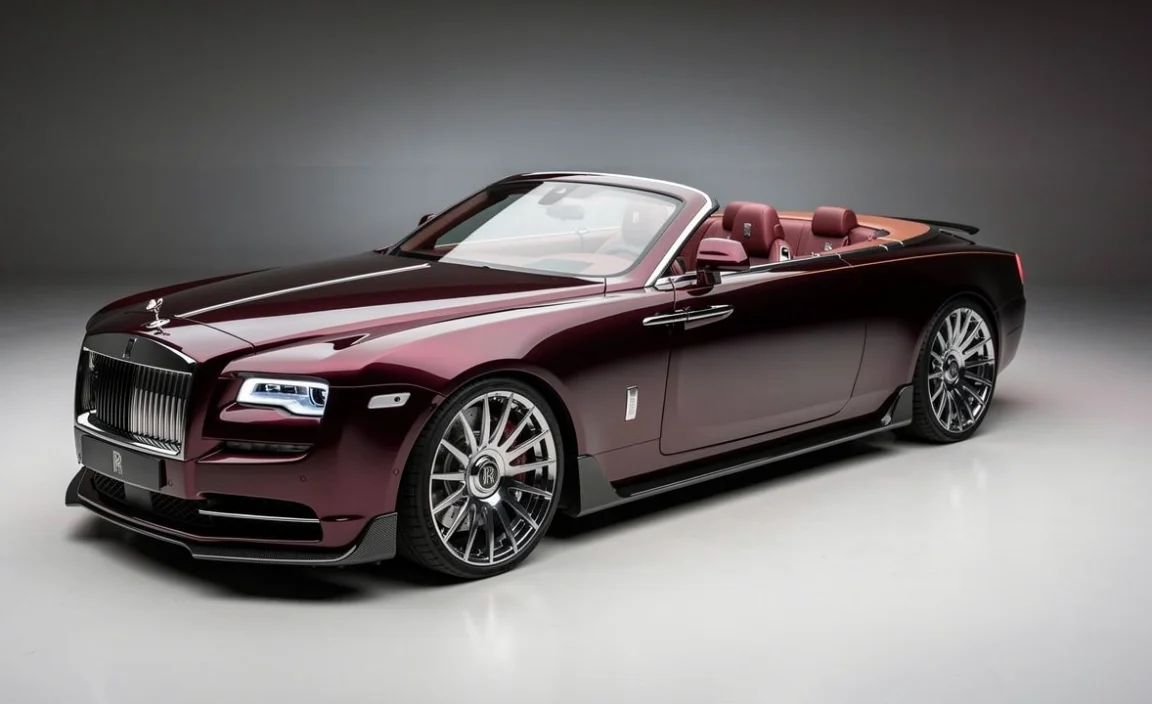
The current title holder. Four examples exist, each built to a completely separate specification for a separate client, and Rolls-Royce has never officially confirmed what any of them paid.
The Droptail program represents Rolls-Royce’s full return to coachbuilding — meaning the client does not choose from a configurator. They commission a body. The La Rose Noire features a hand-laid marquetry deck using more than 1,600 individual wood triangles, a bespoke Audemars Piguet timepiece integrated into the dashboard, and a colour developed specifically for the car over several years.
Underneath is the familiar 6.75-litre twin-turbo V12, retuned for the shorter, lighter body.
Why it costs what it costs: roughly four years of development for a single vehicle, spread across a client base of one.
2. Rolls-Royce Boat Tail — ~$28 Million
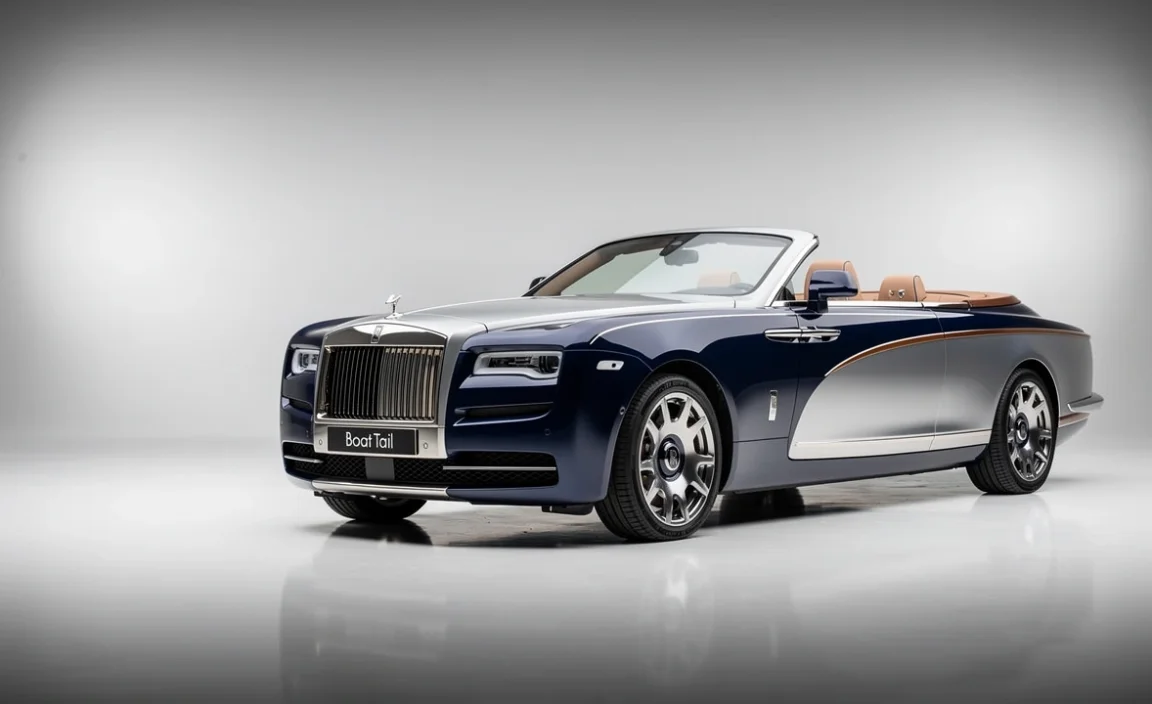
The car that restarted the whole coachbuilding arms race. Three were built, inspired by 1920s J-class yachts and a restored 1932 Boat Tail from the owner’s own collection.
The rear deck opens in a butterfly configuration to reveal a hosting suite complete with a champagne refrigerator calibrated to a specific vintage, a parasol that deploys from the rear, rotating cocktail tables, and a full Christofle tableware set. More than 5,000 hours went into finishing a single example.
3. Gordon Murray S1 LM — ~$20.6 Million
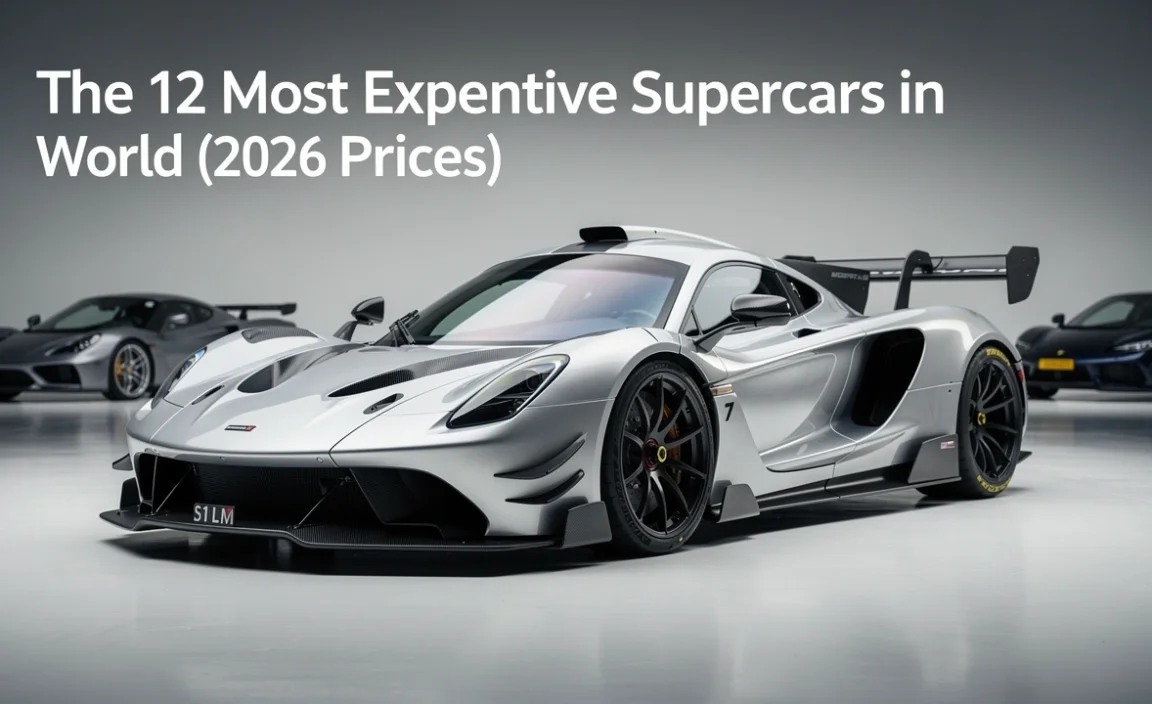
A modern reinterpretation of the McLaren F1 LM by the man who designed the original. Five were built, and a single collector reportedly bought all five at launch — one of which later surfaced at auction and sold for $20,630,000.
It uses a naturally aspirated V12 producing over 690 horsepower paired to a six-speed manual gearbox. In an era of hybrid systems and dual-clutch transmissions, that combination is close to extinct, which is a meaningful part of the valuation.
4. Bugatti La Voiture Noire — ~$18.7 Million
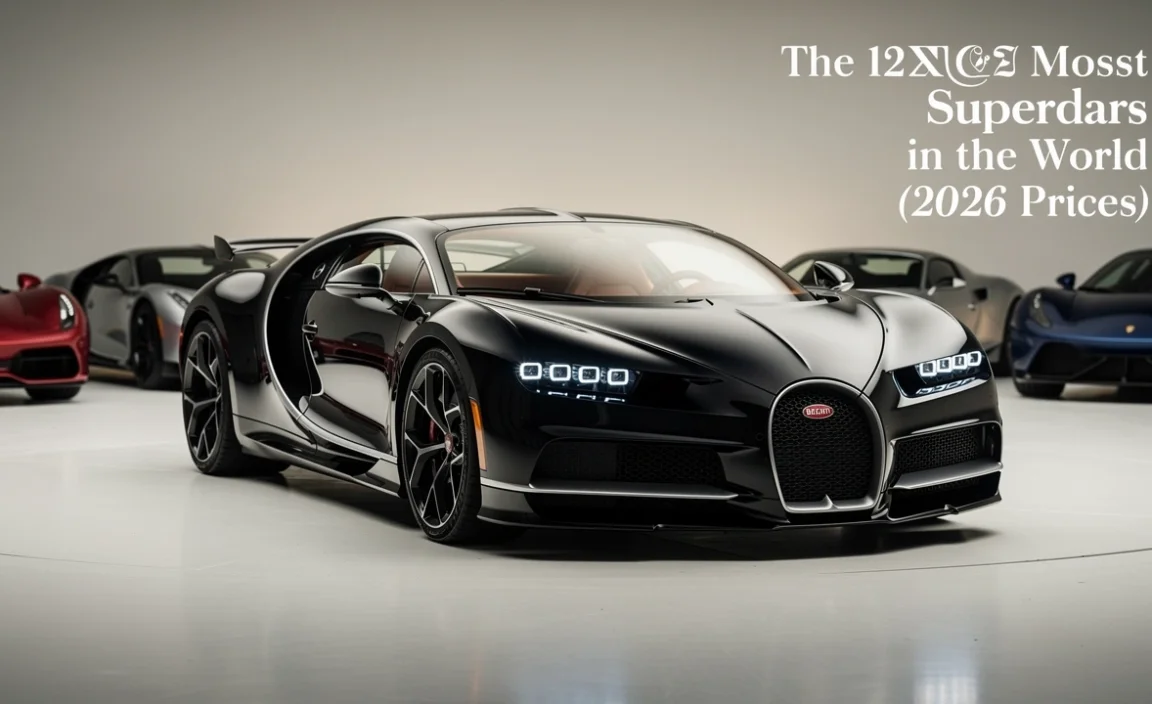
One car. Built as a tribute to the Type 57 SC Atlantic, four of which were made in the 1930s and one of which vanished during the Second World War and has never been found.
The La Voiture Noire uses the quad-turbo 8.0-litre W16, a nearly seamless LED light bar milled from solid aluminium, an exposed carbon chassis spine, and a glossy carbon-fibre finish with a clear-coat depth effect that took months to develop.
5. Pagani Zonda HP Barchetta — ~$17.5 Million
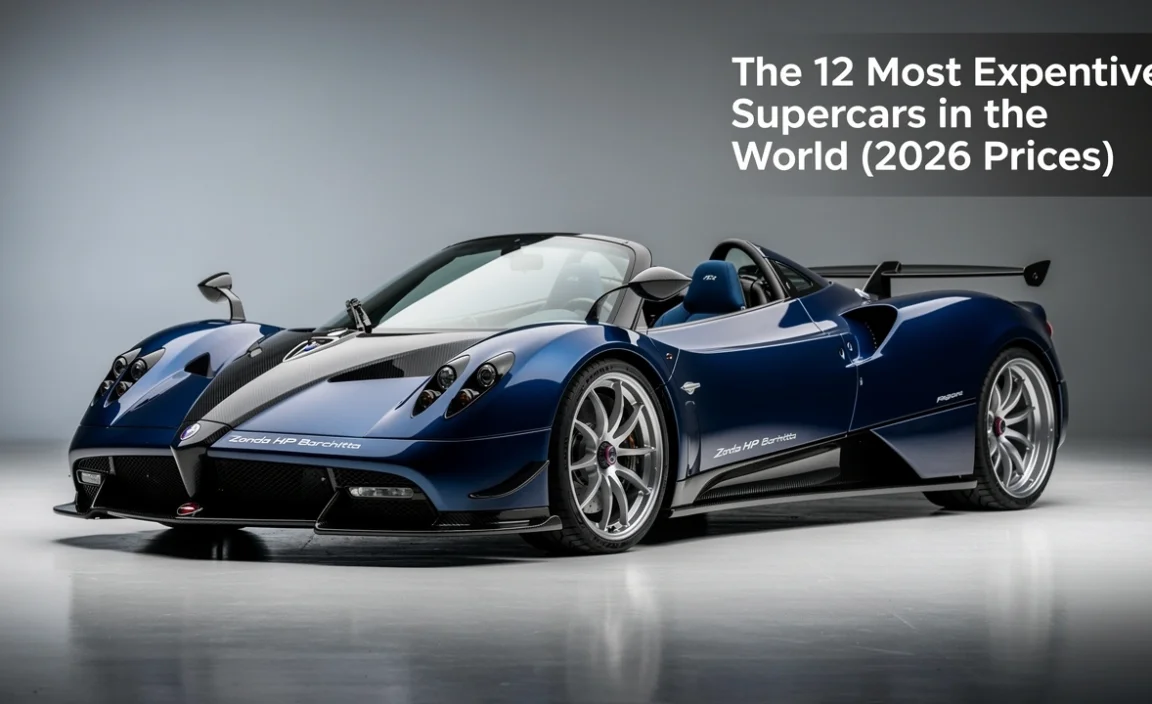
Three cars, one of which Horacio Pagani built for himself — which tells you most of what you need to know about how personal this project was.
The Barchetta is the final expression of the Zonda, with a 7.3-litre naturally aspirated Mercedes-AMG V12 making 789 horsepower, an open roadster body, and rear wheel spats that make it look like a 1950s Le Mans car reimagined by a jeweller.
6. Rolls-Royce Sweptail — ~$13 Million
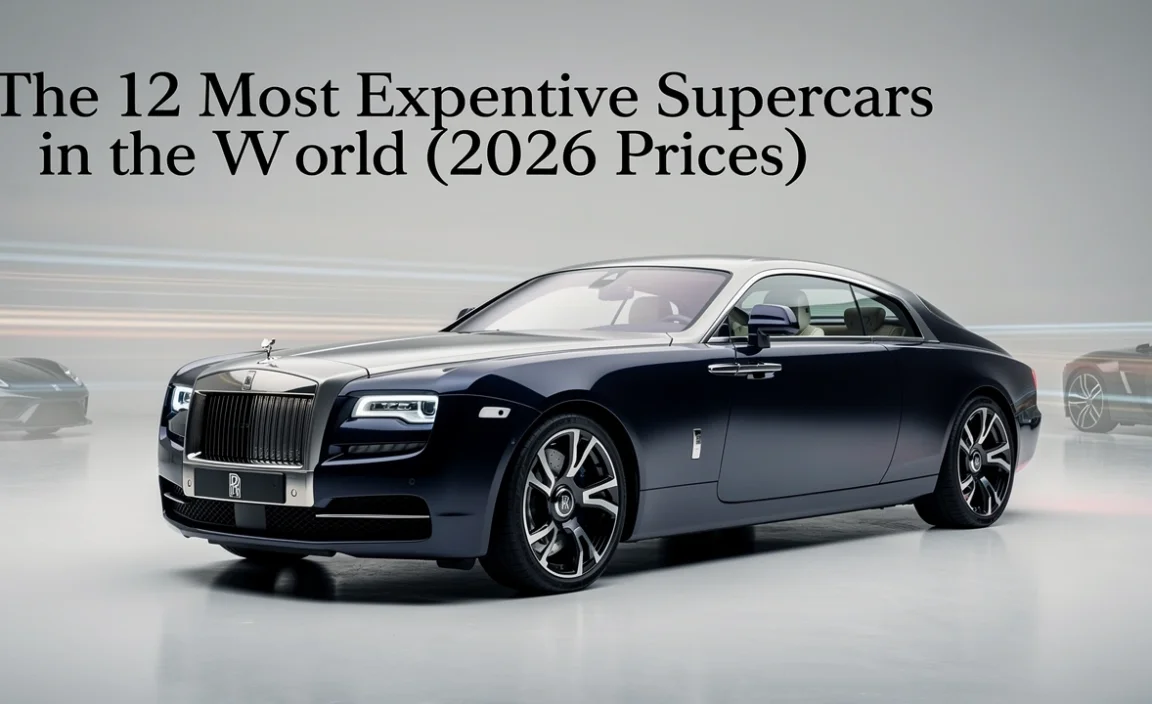
The car that proved the market existed. Commissioned by a single client who wanted a modern interpretation of 1920s and 1930s coachbuilt Rolls-Royces, it debuted at Concorso d’Eleganza Villa d’Este in 2017 and immediately claimed the title of the world’s most expensive new car.
Notable details include a panoramic glass roof, a hand-crafted rear deck, and a champagne cooler concealed in the centre console with two hand-made crystal flutes.
7. Bugatti Chiron Profilée — ~$10.8 Million
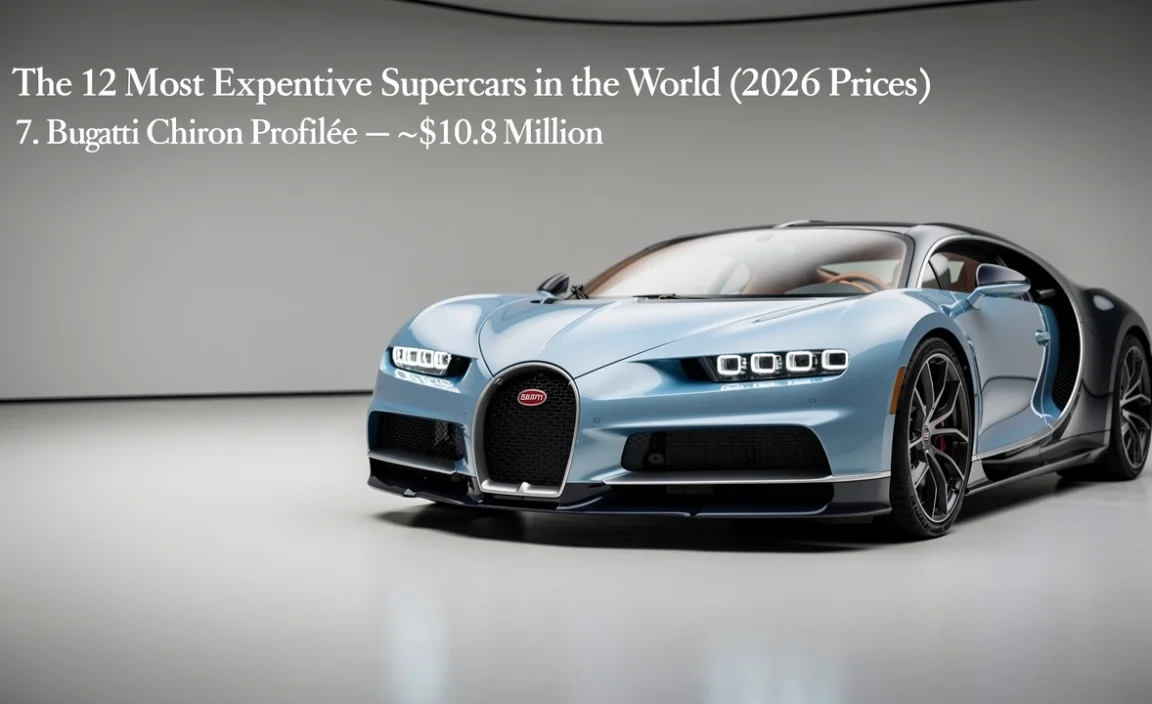
An unusual entry. Bugatti built one Profilée, intended as the first of a small series that was cancelled when every remaining Chiron slot was already spoken for. Rather than shelve it, Bugatti sent the car to auction, where it became the most expensive new car ever sold at public auction.
It uses a 1,479-horsepower W16 with revised aerodynamics — a fixed rear wing, softened suspension, and gearing tuned for road use rather than top-speed runs.
8. Bugatti Centodieci — ~$9 Million
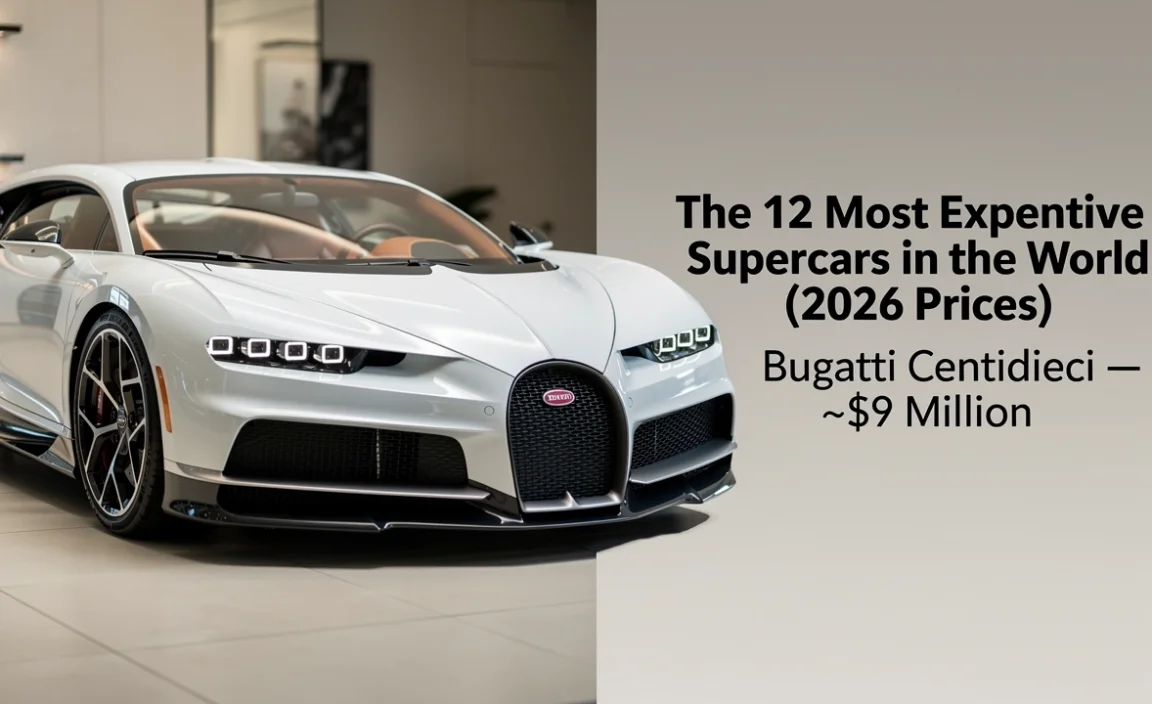
Ten examples, built to honour the EB110 and the brand’s 110th anniversary. The wedge silhouette, five circular side intakes, and slim rear light bar are direct EB110 references executed on Chiron underpinnings, with the W16 pushed to 1,578 horsepower.
9. Lamborghini Veneno Roadster — ~$8.3 Million
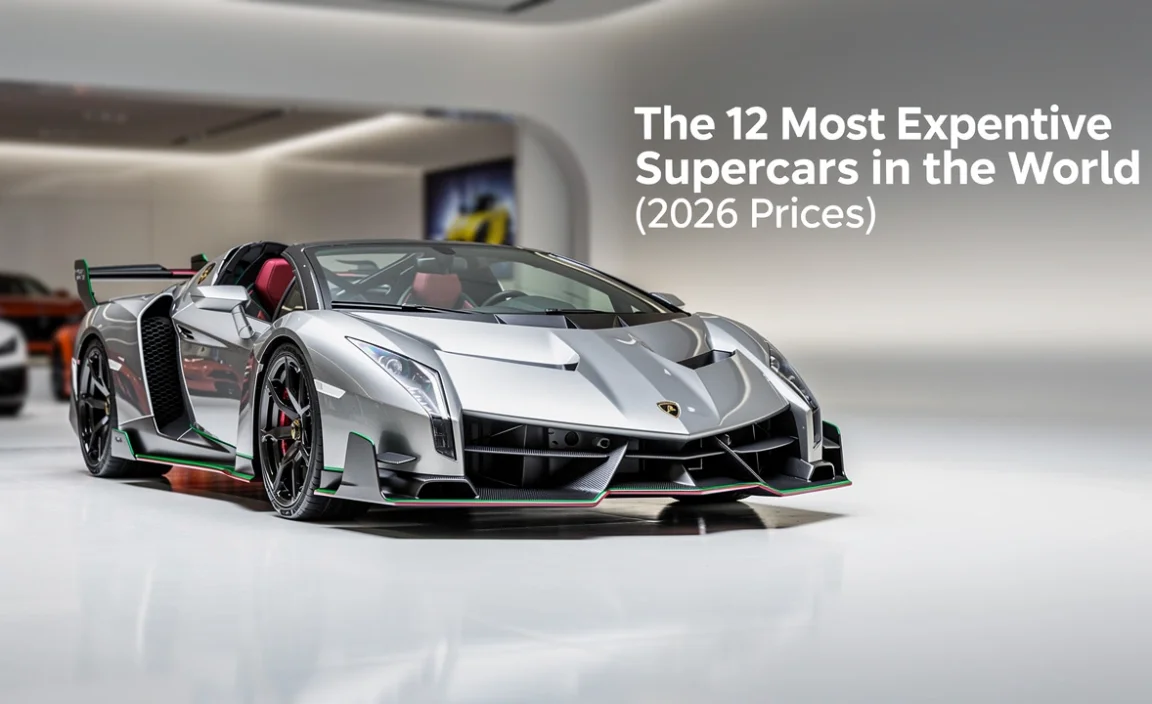
Nine roadsters were built to mark Lamborghini’s 50th anniversary. There is no roof — not a removable one, none at all — and the 6.5-litre V12 produces 740 horsepower. Values on the secondary market have climbed well above the original commission price.
10. Bugatti Divo — ~$5.8 Million
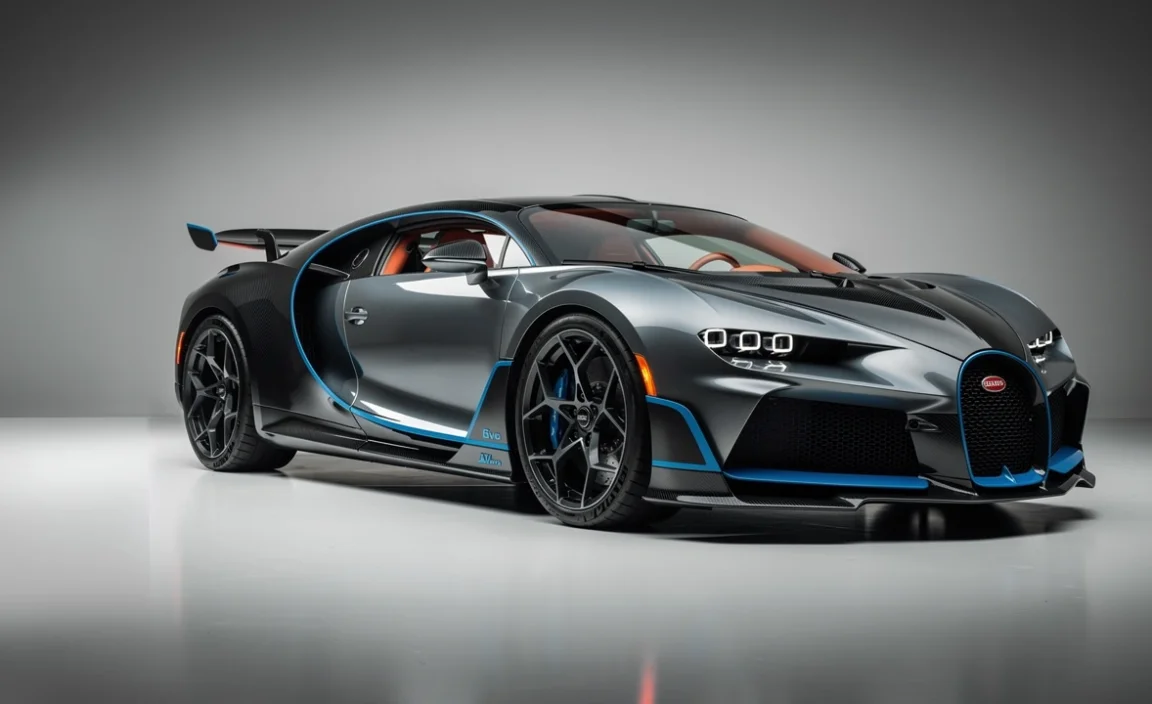
Forty units, all sold before the public announcement. The Divo trades roughly 22 mph of top speed for a substantially quicker Nardo lap time thanks to aggressive aerodynamics and a 77-pound weight reduction. It remains the closest thing Bugatti built to a track-focused Chiron.
11. Automobili Pininfarina B95 — ~$4.8 Million
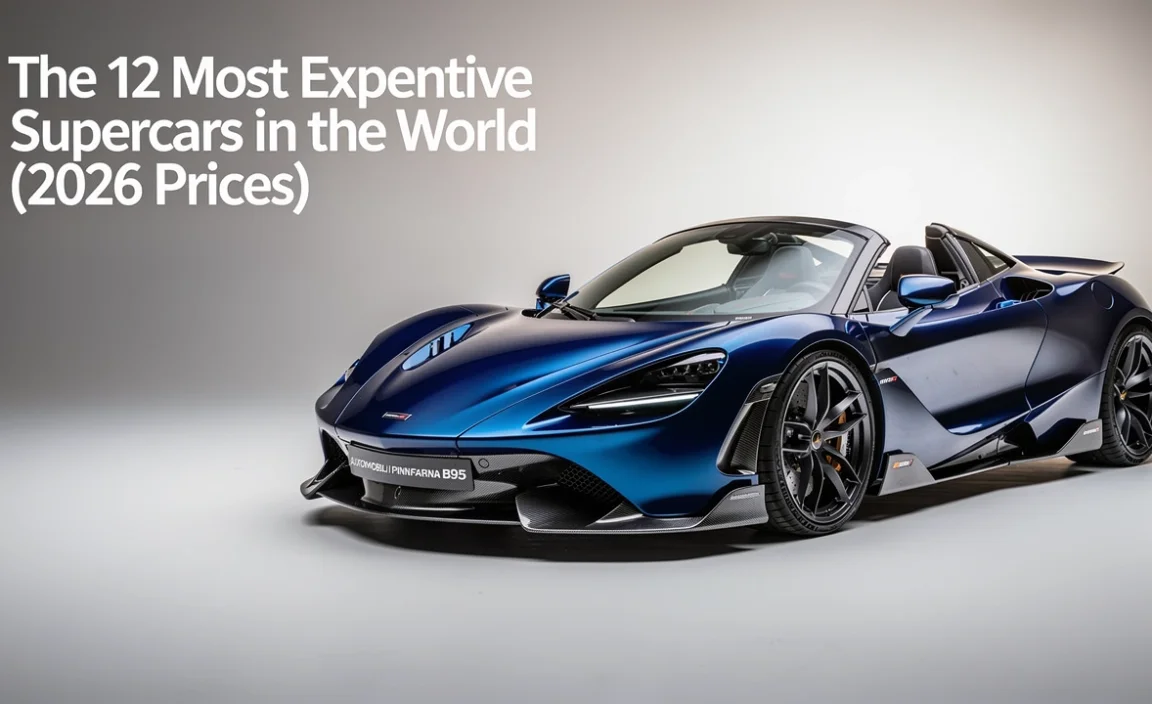
The most expensive electric car in the world. Ten will be built. The open-top “barchetta” body has no roof and no windshield — occupants rely on a wind-deflection system — and the quad-motor powertrain produces close to 1,900 horsepower.
Its presence on this list signals something important: electric hypercars have crossed firmly into eight-figure-adjacent territory, with the Aspark Owl also clearing $3.6 million.
12. Bugatti Tourbillon — ~$4.1 Million
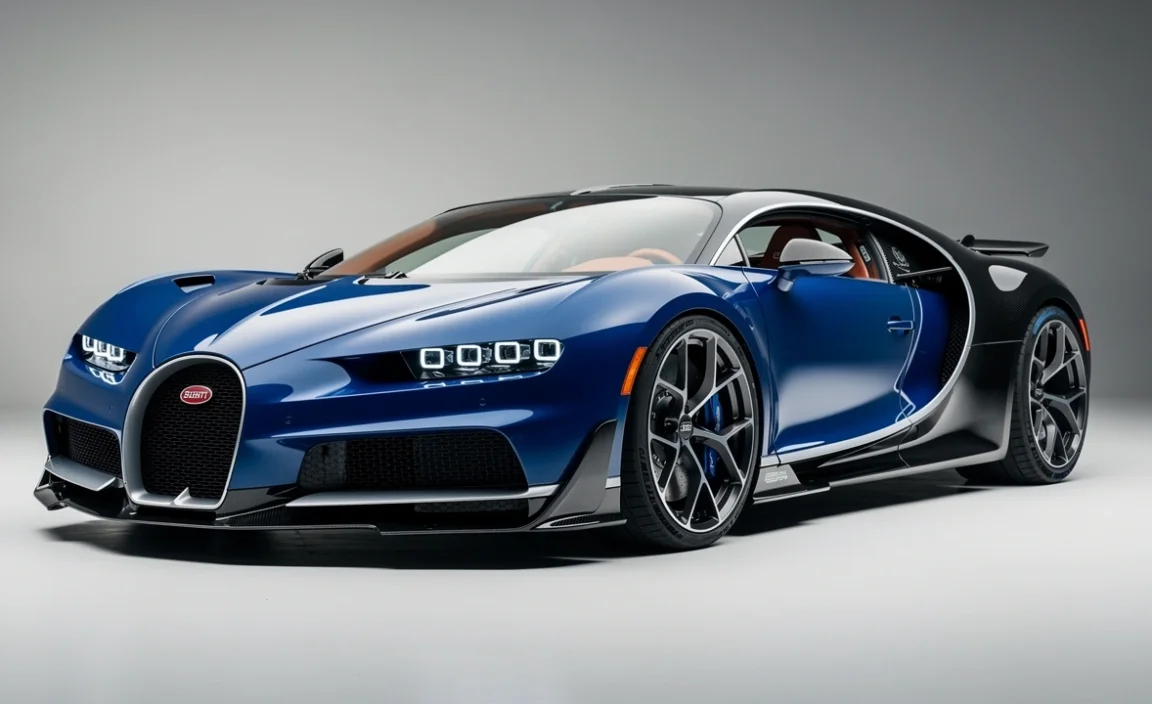
The W16’s successor, and arguably the most significant new hypercar of the decade. Bugatti replaced the quad-turbo W16 with a naturally aspirated 8.3-litre V16 developed with Cosworth, paired to three electric motors for a combined output above 1,800 horsepower.
At 250 units it is the highest-volume car on this list, which is why it sits at the bottom despite being newer and more advanced than most cars above it. Scarcity, not technology, drives the pricing at this level.
[INTERNAL LINK: /bugatti-tourbillon-specs “full Bugatti Tourbillon specifications”]
The Auction Record: A Different Category Entirely
Every list like this gets a comment asking why the $142 million Mercedes is not at number one. The answer is that it is not a supercar being sold as a new car — it is a 1955 racing prototype.
The 1955 Mercedes-Benz 300 SLR Uhlenhaut Coupé sold at a private Mercedes-Benz auction in Stuttgart in 2022 for approximately $142 million, making it the most valuable car ever to change hands. Only two were built, and Mercedes kept both for nearly seventy years.
Behind it sit the Ferrari 250 GTO (multiple sales in the $48–70 million range depending on whether you count private transactions) and a small group of Le Mans-winning Ferraris and Mercedes racers.
Classic racing provenance operates on a completely different valuation logic than new-car exclusivity. A modern hypercar can be built again; a 1962 GTO with a period race history cannot.
[EXTERNAL LINK: RM Sotheby’s or Gooding & Company auction results archive]
Why Do These Cars Cost So Much?
Four factors explain almost all of the pricing at this tier.
Development amortisation. A mainstream automaker spreads billions in development across hundreds of thousands of units. Rolls-Royce spread the Droptail’s four-year program across four cars. The maths is unforgiving.
Hand labour at scale. Five thousand hours of skilled craftsmanship, at realistic European labour rates with overhead, is a seven-figure line item before a single component is fitted.
Bespoke tooling. Coachbuilt bodies require dies, jigs, and fixtures created for one vehicle and then retired. Nothing is reused.
Deliberate scarcity. This is the largest factor and the least tangible. Manufacturers at this level actively restrict supply and vet buyers, because an unsold example damages the brand far more than a smaller production run does. Buyers are frequently required to have an existing ownership history before they are even offered a slot.
What It Actually Costs to Own One
The purchase price is the beginning of the conversation, not the end. Here is what ownership looks like at the top of the market.
Exotic Car Insurance
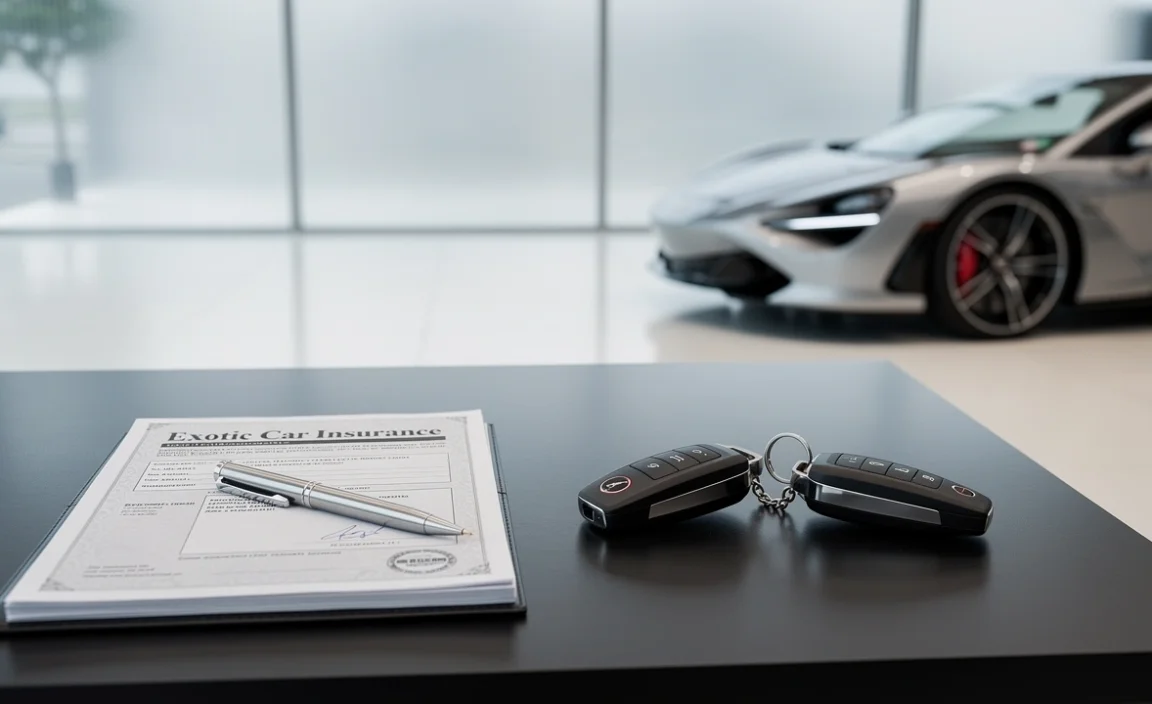
Standard auto policies do not cover cars in this range. Owners use agreed-value policies from specialty insurers — Hagerty, Chubb, PURE, and AIG Private Client are the names that come up most in the US market.
Annual premiums for cars in the $2–5 million range typically land between $30,000 and $120,000, driven by declared annual mileage, storage security, driver history, and whether the car will ever be tracked. Above $10 million, insurance is usually written as part of a broader private client policy covering the whole collection alongside art, jewellery, and property.
The single largest premium reducer is a low declared mileage cap combined with documented secure storage.
[INTERNAL LINK: /exotic-car-insurance-guide “complete exotic car insurance guide”]
Financing and Liquidity
Very few buyers at this level pay cash, and not because they cannot. Specialty lenders such as Woodside Credit and JJ Best Banc offer collector car financing, and private banks routinely structure asset-backed lending against vehicle collections.
The logic is straightforward: if capital deployed elsewhere returns more than the loan costs, financing the car is the rational choice. Terms of 7 to 12 years on appreciating assets are common, with rates that track private banking relationships rather than retail auto lending.
Maintenance and Service
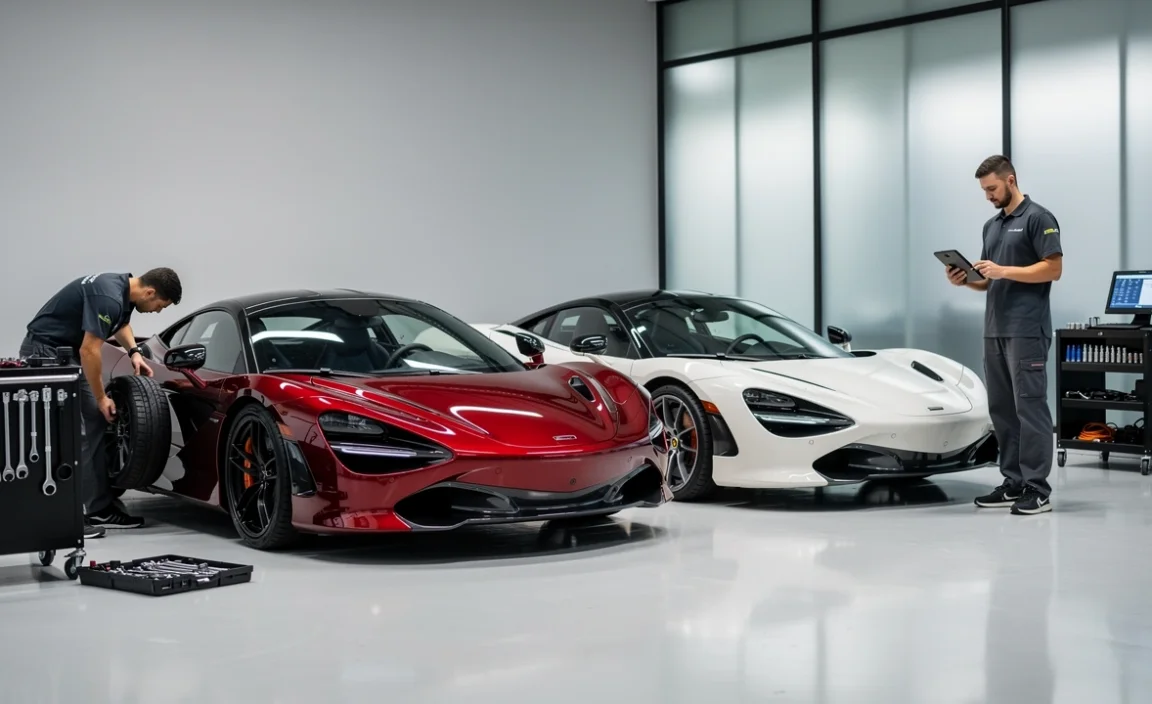
A Bugatti annual service runs roughly $25,000 to $30,000. A tyre change is around $40,000 including mounting, since the tyres must be bonded to the wheels and are only fitted at approved facilities. Some models require the fuel tank to be replaced periodically as a safety measure, a job that can approach six figures.
For coachbuilt one-offs, there is no published service schedule. The manufacturer maintains the car, often by sending technicians to the owner.
Storage, Transport, and Security
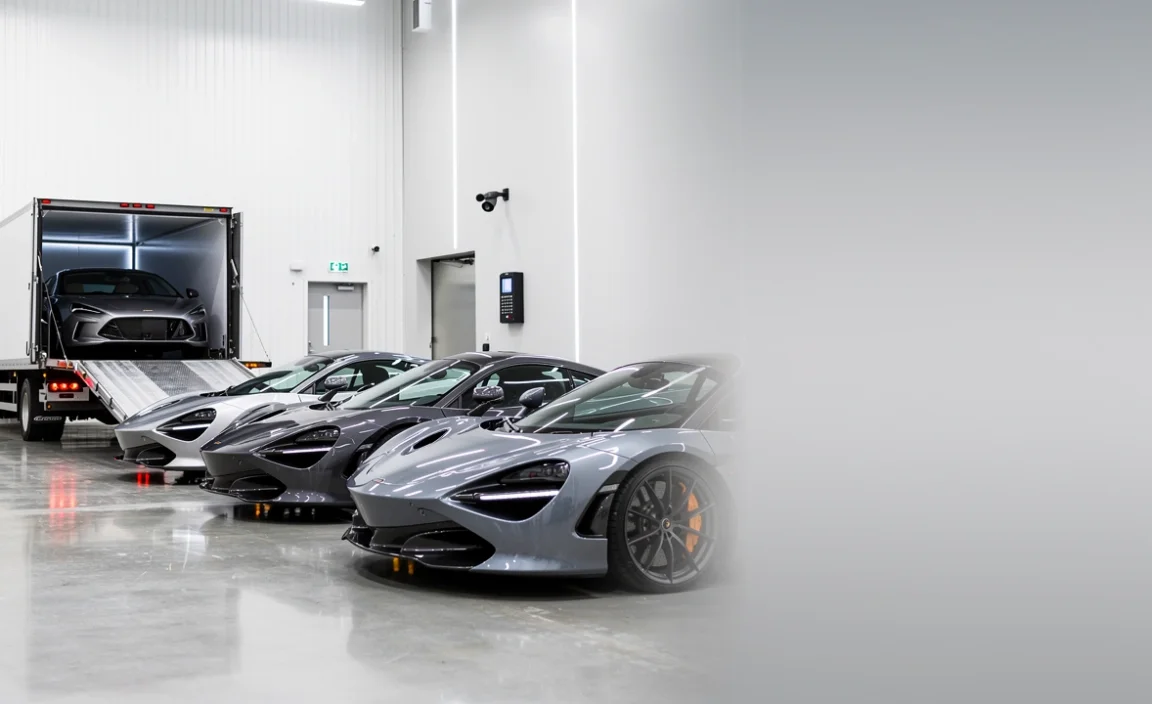
Climate-controlled storage with humidity regulation, battery conditioning, and insured access runs $1,500 to $6,000 per month in major US markets. Enclosed single-vehicle transport costs $3,000 to $12,000 per trip domestically; international air freight for a concours appearance can exceed $80,000 round trip.
Realistic annual carrying cost, excluding depreciation: 3% to 6% of the car’s value for a car driven sparingly, and considerably more if it is actually used.
Do the Most Expensive Supercars Hold Their Value?
Better than almost any other asset class in the automotive world — but not uniformly.
Strong performers share three traits: a single-digit production run, a naturally aspirated engine, and a manual or otherwise historically significant drivetrain. Limited Paganis, the Lamborghini Veneno, and early Bugatti one-offs have all appreciated meaningfully above their original commission prices.
Weaker performers are the higher-volume “limited” cars. A 250-unit run is limited relative to a Toyota Camry but not relative to a 3-unit Boat Tail, and the market prices that difference precisely.
The coachbuilt question mark is that one-offs have almost no comparables. When a car is the only one of its kind, valuation becomes a negotiation rather than a market price — which cuts both ways.
If you are approaching this as an investment rather than a passion purchase, the historical data favours documented racing provenance over modern exclusivity. That is the domain of the 250 GTO, not the Chiron Profilée.
FAQ
What is the most expensive supercar in the world in 2026?
The Rolls-Royce La Rose Noire Droptail, at an estimated $30 million. Only four were built, and Rolls-Royce has never officially confirmed the commission price, so the figure should be treated as an industry estimate.
What is the most expensive car ever sold at auction?
The 1955 Mercedes-Benz 300 SLR Uhlenhaut Coupé, which sold for approximately $142 million in 2022. It is a 1950s racing prototype rather than a modern supercar, which is why it sits in a separate category from new-car pricing.
How much does it cost to insure a multi-million-dollar supercar?
Typically $30,000 to $120,000 per year for cars in the $2–5 million range, using agreed-value policies from specialty insurers. Premiums drop substantially with a low declared annual mileage and documented secure storage.
Can anyone buy these cars if they have the money?
Generally no. Manufacturers at this level vet buyers and frequently require an existing ownership history with the brand before offering an allocation. Money is necessary but not sufficient.
What is the most expensive electric hypercar?
The Automobili Pininfarina B95, at approximately $4.8 million, limited to 10 units with close to 1,900 horsepower. The Aspark Owl follows at around $3.6 million.
Are these cars actually driven?
Rarely. Most cars in this bracket accumulate a few hundred miles per year, and insurance is often written with mileage caps that formalise this. Cars with documented low mileage and complete service history command a premium at resale.
The Bottom Line
The most expensive supercars in the world are not really competing on performance. A $4 million Tourbillon and a $30 million Droptail are not separated by speed — they are separated by how few people can ever own one.
That is the whole product. Engineering excellence is the entry ticket; scarcity is what determines the price. And in a market where the buyer pool is measured in dozens rather than thousands, scarcity has proven remarkably durable as a store of value.
For everyone else, the encouraging news is that the technology developed for these cars reaches attainable models faster than it used to. Active aerodynamics, hybrid torque fill, and carbon monocoques all debuted at the top of the market and now appear in cars costing a fraction as much.
Want to go deeper? Compare real-world ownership costs across the exotic market, or read our breakdown of which supercars have appreciated most over the past decade.
1 thought on “The 12 Most Expensive Supercars in the World (2026 Prices)”