
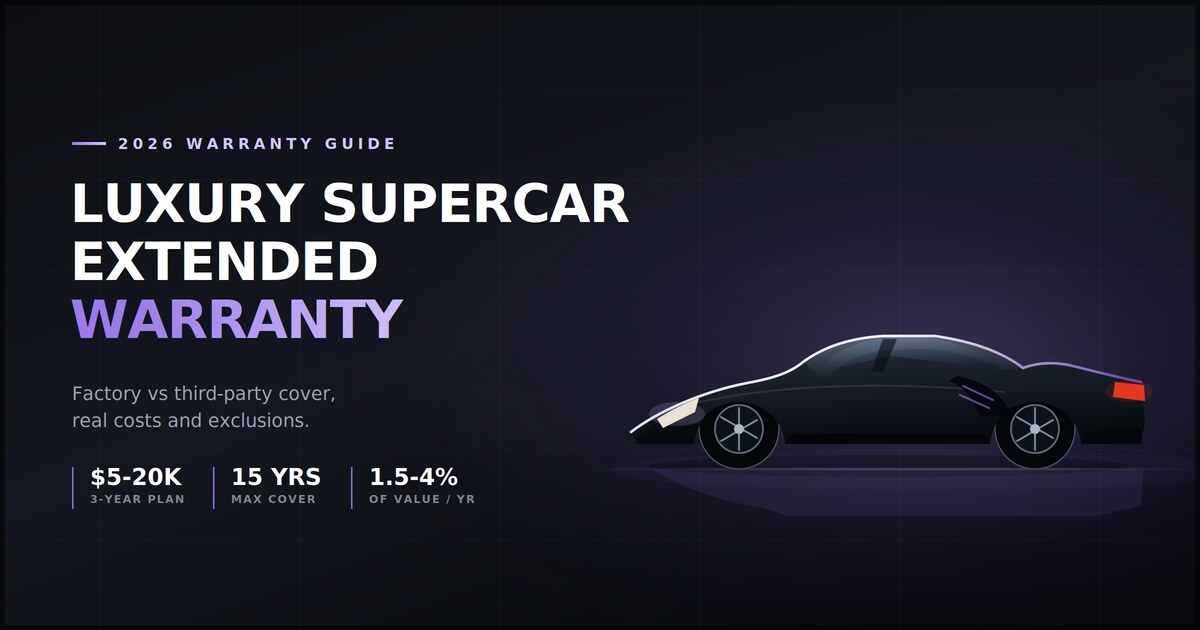
A carbon-ceramic brake replacement on a modern hypercar can exceed $25,000. A dual-clutch transmission rebuild can pass $40,000. A single infotainment control module on some Italian exotics runs five figures before labour.
That is the arithmetic behind extended warranties in this segment. On a mainstream car, an extended warranty is usually a poor bet. On a $300,000 exotic that is out of factory coverage, the maths inverts — sometimes dramatically.
This guide covers what factory extensions and third-party plans actually cost in 2026, what they genuinely cover, and the specific situations where paying the premium is the rational choice.
Why Exotic Repair Costs Are Different
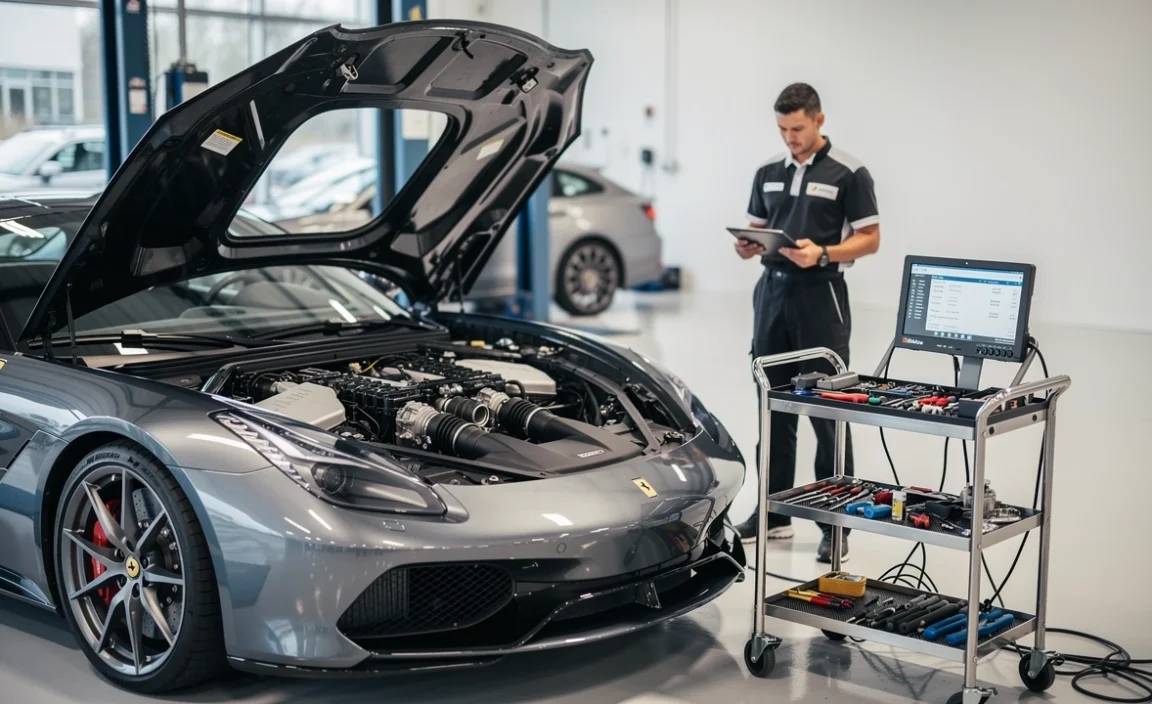
Three structural reasons.
Parts are made in tiny volumes. A control arm produced in a run of 400 units costs vastly more per piece than one produced in a run of 400,000. There is no aftermarket to compete on price.
Labour rates are specialised. Authorised exotic technicians bill $250 to $400 per hour in most US markets. Many jobs also require proprietary diagnostic equipment only the franchised dealer holds.
Access is poor. Mid-engine packaging means a job that takes two hours on a sedan can take twelve. Some engines must be dropped to reach routine service items.
The result: a repair that would cost $1,800 on a luxury sedan can cost $18,000 on a supercar with the same underlying failure.
Factory Extended Warranties
Manufacturer-backed coverage is the gold standard because it uses genuine parts, authorised dealers, and transfers cleanly to the next owner — which measurably helps resale.
| Manufacturer | Program | Typical extension | Notes |
|---|---|---|---|
| Ferrari | New Power / Power15 | Up to 15 years total | Requires annual dealer service; strong transferability |
| Lamborghini | Extended Warranty | +1 to +2 years | Requires inspection before enrolment |
| McLaren | Extended Warranty | +1 to +3 years | Available for older cars via approved inspection |
| Porsche | Approved / Extended | +1 to +2 years, renewable | Among the most affordable and flexible in the segment |
| Aston Martin | Timeless / Extended | +1 to +2 years | Renewable annually on many models |
| Bentley / Rolls-Royce | Extended Warranty | +1 to +3 years | Typically requires main-dealer service history |
Typical annual cost for factory extensions runs roughly 1.5% to 4% of the vehicle’s value per year — meaning $4,500 to $12,000 annually on a $300,000 car, and considerably more on hypercars.
The catch: most factory programs require enrolment before the original warranty expires, or an approved inspection to re-enter. Letting coverage lapse and trying to reinstate later is significantly more expensive, and sometimes impossible.
Third-Party Extended Warranties
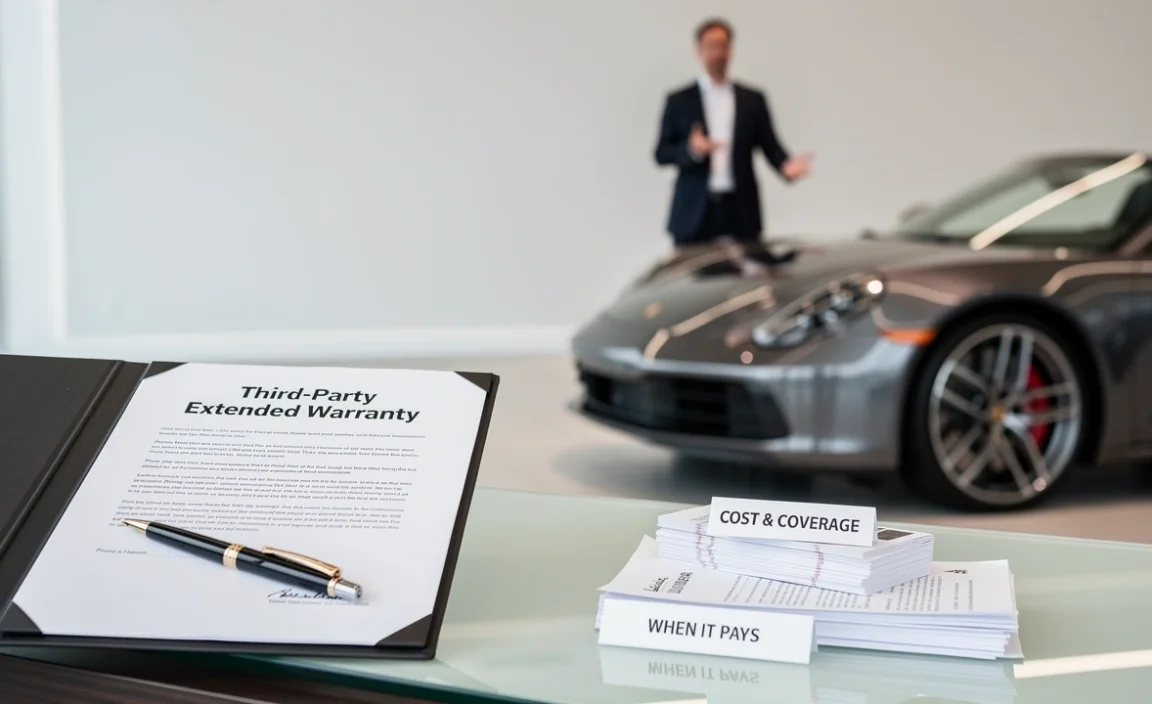
For cars outside factory eligibility, third-party providers fill the gap. Quality varies enormously.
What to look for:
- Exclusionary coverage, not inclusionary. An exclusionary contract lists what is not covered and includes everything else. An inclusionary contract lists what is covered and excludes everything else — always the weaker product.
- A named underwriter with an A.M. Best rating. The administrator selling you the plan and the insurer backing it are often different companies. The rating that matters is the underwriter’s.
- Choice of repair facility. You want the ability to use the franchised dealer, not a mandated network shop that cannot service the car.
- Direct payment to the shop. Reimbursement models leave you fronting a $20,000 repair.
- Documented exotic experience. Ask for claim examples on your specific make. Many providers cap payouts far below exotic repair costs.
Typical third-party cost: $5,000 to $20,000 for a 2–4 year term on cars in the $150,000–$400,000 range, often with a $100–$500 per-visit deductible.
What Is Almost Never Covered
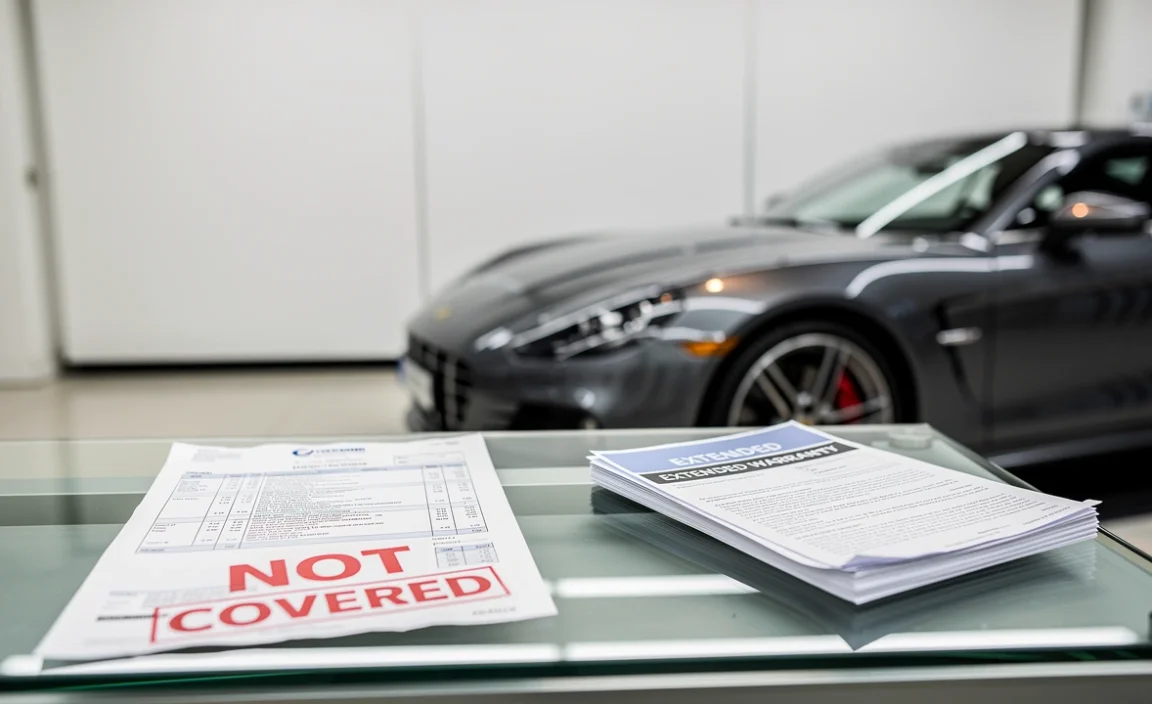
Read the exclusions before the coverage list. Standard exclusions across nearly all providers include:
- Wear items: brake pads and rotors, clutches, tyres, wiper blades, bulbs
- Cosmetic damage: paint, trim, upholstery, glass
- Track use. This is the big one. Almost every contract voids coverage for damage sustained during timed events, track days, or competition. Some void the entire contract, not just the claim.
- Modifications. Aftermarket exhausts, tunes, and suspension changes commonly void powertrain coverage.
- Pre-existing conditions and deferred maintenance. Missed service intervals are the most common claim denial reason in this segment.
- Consequential damage from an uncovered part failing.
Keep every service receipt. Documented adherence to the maintenance schedule is what makes a claim payable.
Is It Worth It? Running the Numbers

The honest answer depends on the car.
Strong case for coverage: – Modern hybrid hypercars with complex electrified powertrains – Any car with air suspension, active aero, or carbon-ceramic systems out of factory coverage – Italian and British exotics with known electrical or module issues – Cars you intend to sell within three years — transferable factory coverage is a genuine resale asset
Weaker case: – Porsche 911s, which have among the lowest unscheduled repair rates in the segment – Cars you will drive under 1,000 miles a year and keep indefinitely – Owners with sufficient liquidity to self-insure, who can simply set the premium aside
A useful benchmark: if the annual premium is less than roughly 40% of a single realistic major repair on that model, the coverage is usually worth carrying. On a car where a transmission failure costs $40,000 and coverage costs $9,000 a year, the maths favours the warranty. On a car where the worst realistic bill is $12,000 and coverage costs $8,000, it does not.
How to Buy Without Overpaying
1. Get the factory quote first, even if you expect it to be higher. It establishes the benchmark.
2. Negotiate. Extended warranty pricing at dealerships carries substantial margin. Quoted prices are frequently 20–40% above the dealer’s cost.
3. Never bundle it into the finance amount without checking the rate. Rolling $10,000 of coverage into a 12-year loan means paying interest on it for over a decade.
4. Confirm transferability and the transfer fee before purchase. Non-transferable coverage loses most of its resale value.
5. Check the cancellation terms. Reputable contracts offer prorated refunds. If a provider will not refund unused coverage, that tells you what you need to know.
6. Get the full contract, not the brochure. The exclusions section is where the product actually lives.
FAQ
How much does an exotic car extended warranty cost?
Roughly 1.5% to 4% of vehicle value per year for factory coverage, and $5,000 to $20,000 for a 2–4 year third-party contract on a car in the $150,000–$400,000 range.
Does Ferrari offer an extended warranty?
Yes. Ferrari’s New Power program can extend coverage up to 15 years from first registration, provided the car receives its scheduled annual service at an authorised dealer.
Are third-party exotic car warranties worth it?
They can be, but only exclusionary contracts from A.M. Best-rated underwriters that allow franchised dealer repairs and pay the shop directly. Inclusionary contracts with mandated network shops are generally poor value on exotics.
Does an extended warranty cover track days?
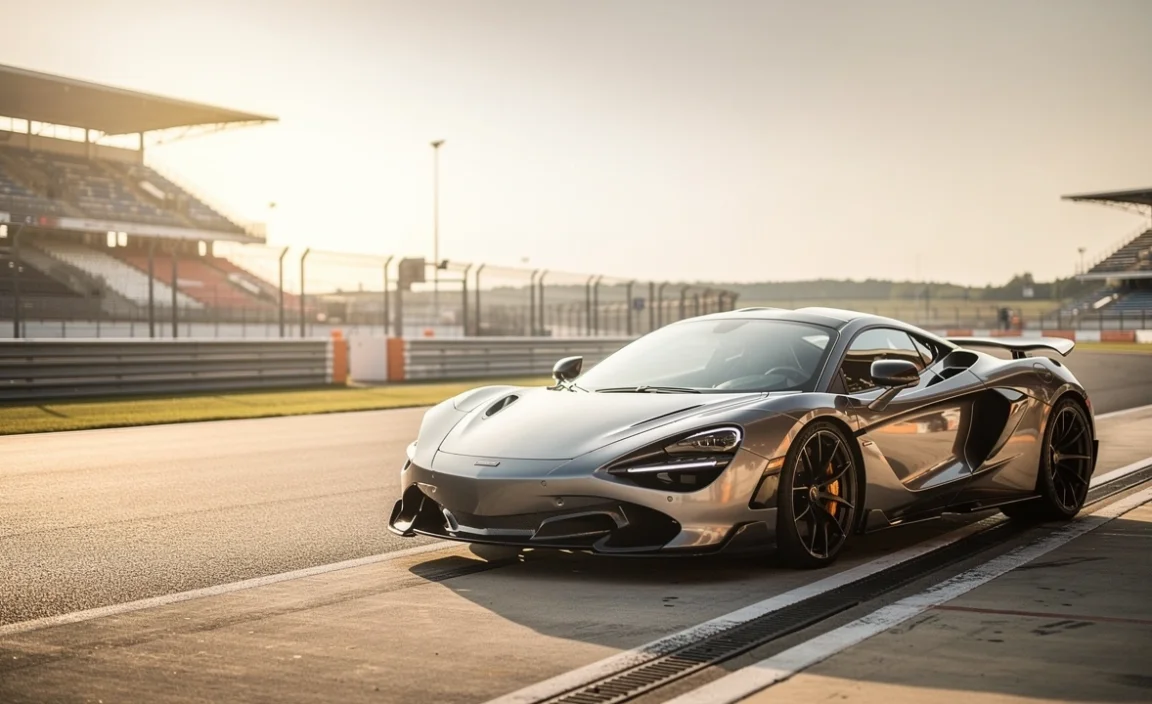
Almost never. Nearly every contract excludes damage from timed events, track days, and competition, and some void coverage entirely if track use is discovered.
Does an extended warranty transfer to a new owner?

Factory programs usually transfer for a modest fee and add real resale value. Third-party contracts vary — confirm transferability in writing before buying.
The Bottom Line
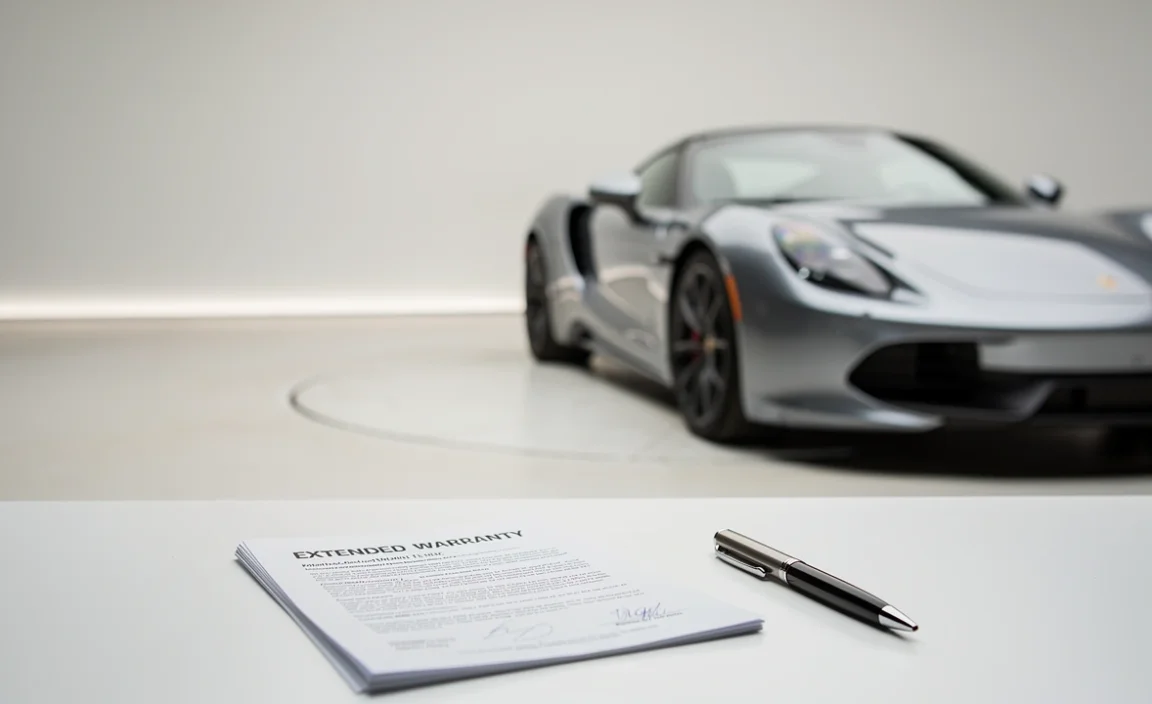
An extended warranty on a supercar is not a service contract in the ordinary sense — it is catastrophic-risk insurance on an asset where a single failure can cost as much as a family car.
Buy factory coverage while the car is still eligible, keep every service record, and read the exclusions before the coverage summary. If you are choosing a third-party plan, the underwriter’s rating and the exclusionary structure matter more than the price.
2 thoughts on “Luxury Supercar Extended Warranty: What It Costs and When It Pays”