
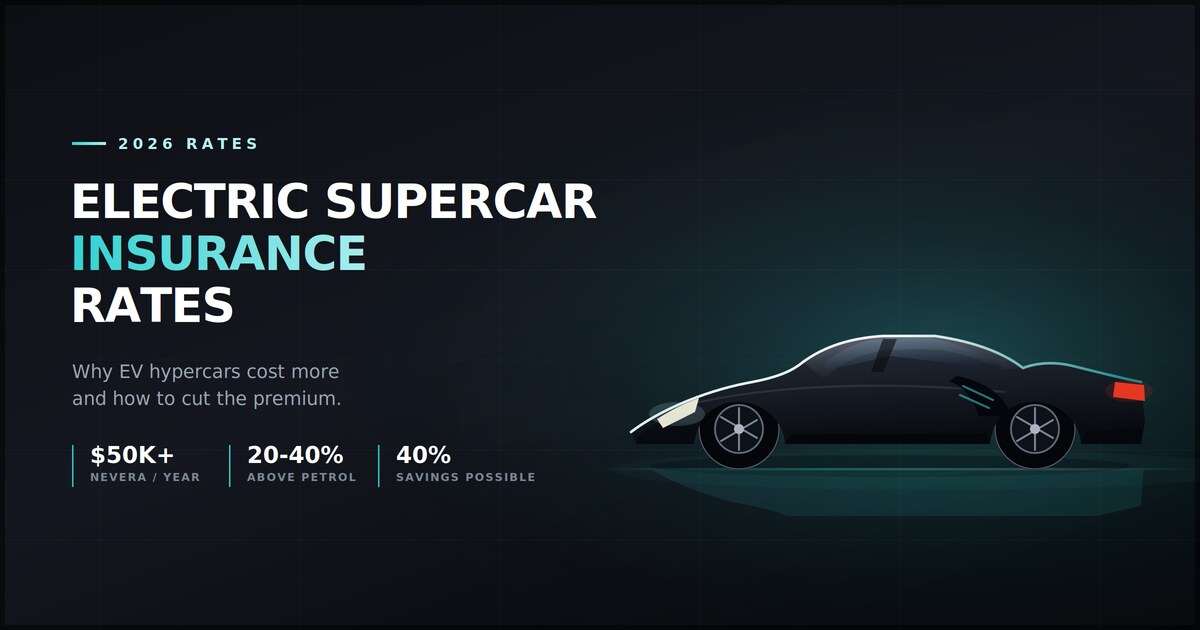
Insure a $2 million petrol hypercar and a $2 million electric one, and the electric car will almost always cost more. Often 20% to 40% more.
This surprises people, because electric cars have fewer moving parts and generally better active safety systems. The explanation has nothing to do with reliability and everything to do with what happens after a collision — and understanding it is the key to getting your premium down.
Here is what electric supercar insurance actually costs in 2026, why the gap exists, and what genuinely reduces it.
Typical Annual Premiums by Model
Figures assume a clean driving record, a driver over 35, garage storage in a low-crime area, agreed-value coverage, and roughly 3,000 declared annual miles.
| Model | Approx. value | Typical annual premium |
|---|---|---|
| Porsche Taycan Turbo GT | $235,000 | $4,500 – $9,000 |
| Lotus Evija | $2,300,000 | $45,000 – $95,000 |
| Rimac Nevera | $2,400,000 | $50,000 – $110,000 |
| Pininfarina Battista | $2,200,000 | $45,000 – $100,000 |
| Aspark Owl | $3,600,000 | $70,000 – $150,000 |
| Pininfarina B95 | $4,800,000 | $90,000 – $190,000 |
| Tesla Roadster (2nd gen) | $250,000 | $5,000 – $11,000 |
| Rolls-Royce Spectre | $400,000 | $7,000 – $15,000 |
Premiums vary enormously by state. Florida, Michigan, Louisiana, and Nevada consistently sit at the top of the range; Maine, Ohio, and Idaho at the bottom. The same car can differ by 100% between states.
Why Electric Supercars Cost More to Insure
1. Battery replacement dominates the risk model. The pack is the single most expensive component in the car — commonly 30% to 50% of total vehicle value. On a $2 million hypercar, that is a $600,000 to $1 million part.
Critically, insurers must treat any structural impact near the pack as a potential total loss, because certifying a damaged high-voltage battery as safe is difficult and often impossible. A collision that would be a repairable rear-end incident on a petrol car can total an EV.
2. Repair networks are thin. Very few facilities are certified for high-voltage work on these vehicles. Fewer options means longer repair times, higher labour rates, and more paid rental or storage days per claim.
3. Structural bonding complicates repair. Many EV hypercars use bonded carbon monocoques with the battery as a stressed structural member. Damage to the structure frequently cannot be repaired to certification standards, forcing a total loss.
4. Acceleration affects the actuarial model. Cars capable of 0–60 in under two seconds show elevated claim frequency in the first year of ownership across the segment. Insurers price this in.
5. Fire risk after damage. Thermal runaway risk means damaged EVs require specialised storage and handling, adding cost to every claim even when the car is repairable.
6. Limited loss history. Insurers price uncertainty conservatively. As EV hypercars accumulate claims data, this component of the premium should decline — but it has not yet.
What Actually Lowers Your Premium
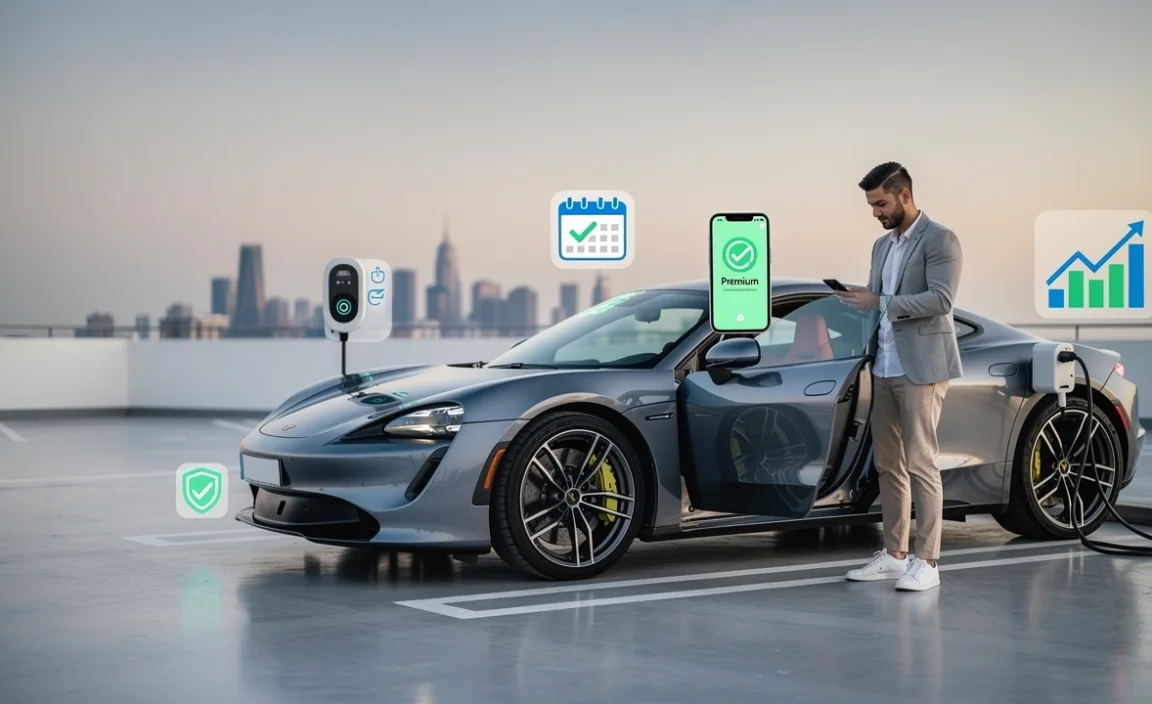
In rough order of impact:
Agreed-value coverage from a specialty insurer. Standard carriers either decline these vehicles or price them punitively. Hagerty, Chubb, PURE, and AIG Private Client are the main US options. Agreed value also removes the depreciation dispute at claim time.
Low declared mileage. Moving from 7,500 to 2,500 declared annual miles commonly reduces premiums by 25–40%. This is the single largest controllable lever.
Documented secure storage. A locked, monitored, climate-controlled garage with photographic proof can reduce premiums 10–20%.
Bundling into a private client policy. Insuring the car alongside your home, other vehicles, art, and jewellery under one private client policy typically produces the largest total saving available.
Higher deductible. Moving from $5,000 to $25,000 on a seven-figure car can cut the premium 15–25%. Reasonable if you have the liquidity to self-insure smaller claims.
Driver restriction. Limiting the policy to named experienced drivers over 30 reduces premiums meaningfully. Adding a driver under 25 can double them.
Clean record and defensive driving credentials. Advanced driving certifications are recognised by some specialty insurers.
Anti-theft and telematics. GPS tracking and immobilisers can produce a 5–15% reduction.
extended warranty vs insurance coverage
Coverages That Matter Specifically for Electric Supercars
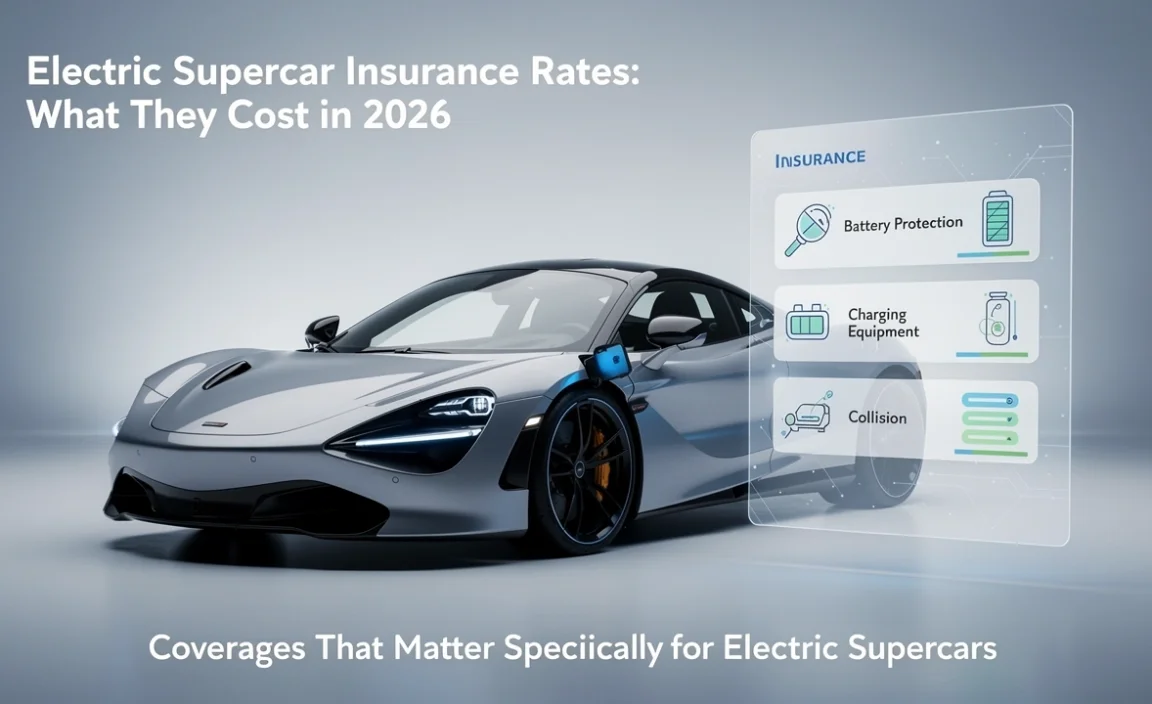
Agreed value, not actual cash value. Non-negotiable at this level. ACV policies pay depreciated value and produce disputes on cars with no meaningful comparables.
Battery-specific coverage. Confirm in writing that battery damage from a covered event is included, and check for exclusions on degradation or charging-related damage.
Charging equipment coverage. Home charging hardware for these cars can cost $10,000 to $40,000 installed. Confirm it is covered under home or auto.
Diminished value coverage. After a repaired accident, the car’s market value drops permanently. Diminished value coverage compensates for this and is rarely included by default.
Worldwide and transit coverage. If the car ships internationally for events, confirm coverage applies in transit and abroad.
Track exclusions. Nearly all policies exclude timed events. If you intend to track the car, arrange separate event coverage — assuming your policy covers it is one of the most expensive mistakes in this segment.
Are Rates Coming Down?
Gradually, for three reasons.
Battery pack costs continue falling on a per-kWh basis, though hypercar packs remain custom and expensive. Repair networks are expanding as manufacturers certify more facilities for high-voltage work. And loss data is accumulating, which allows insurers to price actual risk rather than uncertainty.
Working against this: EV hypercar values are rising, and repair complexity on bonded carbon structures is not improving. The realistic expectation is a slow narrowing of the gap with petrol equivalents, not elimination.
FAQ
Why is electric supercar insurance so expensive?
Primarily battery replacement cost, which can be 30–50% of vehicle value, combined with the fact that structural damage near the pack often forces a total loss. Thin repair networks and limited claims history add further cost.
How much does it cost to insure a Rimac Nevera?
Typically $50,000 to $110,000 per year with agreed-value coverage from a specialty insurer, assuming a clean record and low declared mileage. State of registration causes most of the variance.
Is electric car insurance more expensive than petrol?
At the hypercar level, yes — usually 20% to 40% more for a comparable value. At mainstream price points the gap has largely closed and in some cases reversed.
Do standard insurers cover electric supercars?
Rarely above roughly $250,000 in value. Most owners use specialty carriers such as Hagerty, Chubb, PURE, or AIG Private Client, which offer agreed-value policies designed for high-value vehicles.
How can I reduce my electric supercar insurance premium?
The largest levers are reducing declared annual mileage, documenting secure storage, bundling into a private client policy, and raising your deductible. Together these can reduce a premium by 40% or more.
The Bottom Line
Electric supercar insurance is priced around a single scenario: a collision that damages the battery structure and turns a repairable accident into a total loss. Everything about the premium follows from that.
The practical response is to get quotes from at least three specialty carriers rather than a standard broker, insure through an agreed-value policy with battery coverage confirmed in writing, and use the mileage and storage levers aggressively. Most owners who shop properly find a 30–50% spread between the highest and lowest quote for identical coverage.
And get the quote before you buy. On a car in this bracket, the insurance figure can materially change whether the purchase makes sense.
financing requires bound coverage first
1 thought on “Electric Supercar Insurance Rates: What They Cost in 2026”