

Search “exotic car lease” and you will find a lot of Instagram accounts advertising a Lamborghini for $1,999 a month. What they do not advertise is the $60,000 due at signing, the 5,000-mile annual cap, and the excess wear clause that turns a stone chip into a four-figure charge.
Exotic leasing can be an excellent decision. It can also be the single most expensive way to experience a car. The difference comes down to understanding three numbers — residual value, money factor, and capitalised cost — and knowing which cars lease well and which do not.
Here is how it actually works.
How Exotic Leasing Differs From Normal Leasing

A mainstream lease is a standardised product from a manufacturer’s captive finance arm. An exotic lease usually is not.
Fewer captive programs. Porsche, Bentley, Aston Martin, and Maserati all have captive leasing. Ferrari, Lamborghini, McLaren, and Rolls-Royce lease primarily through third-party specialists rather than in-house programs, which means terms vary widely between providers.
Residual values are set conservatively. Because exotic resale is volatile, lessors protect themselves with low residuals — which directly raises your monthly payment.
Mileage caps are much lower. Where a normal lease offers 10,000 or 12,000 miles a year, exotic leases commonly cap at 2,500 to 5,000 miles. Overage runs $2 to $6 per mile.
Personal guarantees are common. Even when the lease is written to a business entity, most lessors require a personal guarantee at this level.
The Three Numbers That Determine Your Payment

Capitalised cost is the negotiated price of the car. This is negotiable, and it is where most of your leverage sits. Lower the cap cost and the payment drops proportionally.
Residual value is what the lessor projects the car will be worth at lease end, expressed as a percentage of MSRP. A 36-month exotic lease residual typically lands between 50% and 65%. Higher is better for you — you only pay for the difference between cap cost and residual.
Money factor is the lease equivalent of an interest rate. Multiply it by 2,400 to get the approximate APR. A money factor of 0.00300 equals roughly 7.2% APR. Exotic money factors in 2026 commonly run 0.00250 to 0.00420, or roughly 6% to 10%.
Your payment is, simplified: (cap cost − residual) ÷ term plus (cap cost + residual) × money factor, plus tax.
Realistic Monthly Payments
The figures below assume 36 months, 5,000 miles per year, well-qualified credit, and roughly 15% due at signing. Actual quotes vary substantially by region, spec, and provider.
| Car | Approx. MSRP | Typical monthly | Due at signing |
|---|---|---|---|
| Porsche 911 Carrera S | $150,000 | $2,000 – $2,600 | $18,000 – $25,000 |
| Aston Martin Vantage | $195,000 | $2,900 – $3,700 | $25,000 – $32,000 |
| Lamborghini Huracán successor | $270,000 | $4,200 – $5,400 | $38,000 – $50,000 |
| Ferrari 296 GTB | $345,000 | $5,500 – $7,200 | $50,000 – $70,000 |
| Rolls-Royce Cullinan | $435,000 | $6,800 – $8,900 | $60,000 – $85,000 |
| McLaren Artura Spider | $280,000 | $4,400 – $5,800 | $40,000 – $55,000 |
Advertised “from” pricing on social media almost always assumes an unusually large down payment, a short term, or a mileage cap of 2,500 miles or less. Ask for the full lease worksheet before comparing anything.
Where to Actually Lease an Exotic
Manufacturer captives (Porsche Financial Services, Bentley Financial Services) offer the most transparent terms and the best money factors when they participate. Start here if your car is eligible.
Franchised dealer arrangements. Many exotic dealers have relationships with lenders like US Bank, Ally, or specialty lessors and can originate a lease directly. Terms are negotiable and vary by store.
Exotic lease specialists. Companies including Premier Financial Services and Putnam Leasing dominate this space in the US. Their signature product is a simple-interest, open-end lease with a balloon payment at the end — often marketed as more flexible than a traditional closed-end lease, because you can sell the car mid-term and capture any equity yourself.
Lease takeovers. Swapalease and LeaseTrader occasionally list exotics from people exiting early. You inherit the remaining term with no acquisition fee, which can be excellent value, but you also inherit any accumulated wear liability. Inspect carefully.
Open-End vs. Closed-End Leases
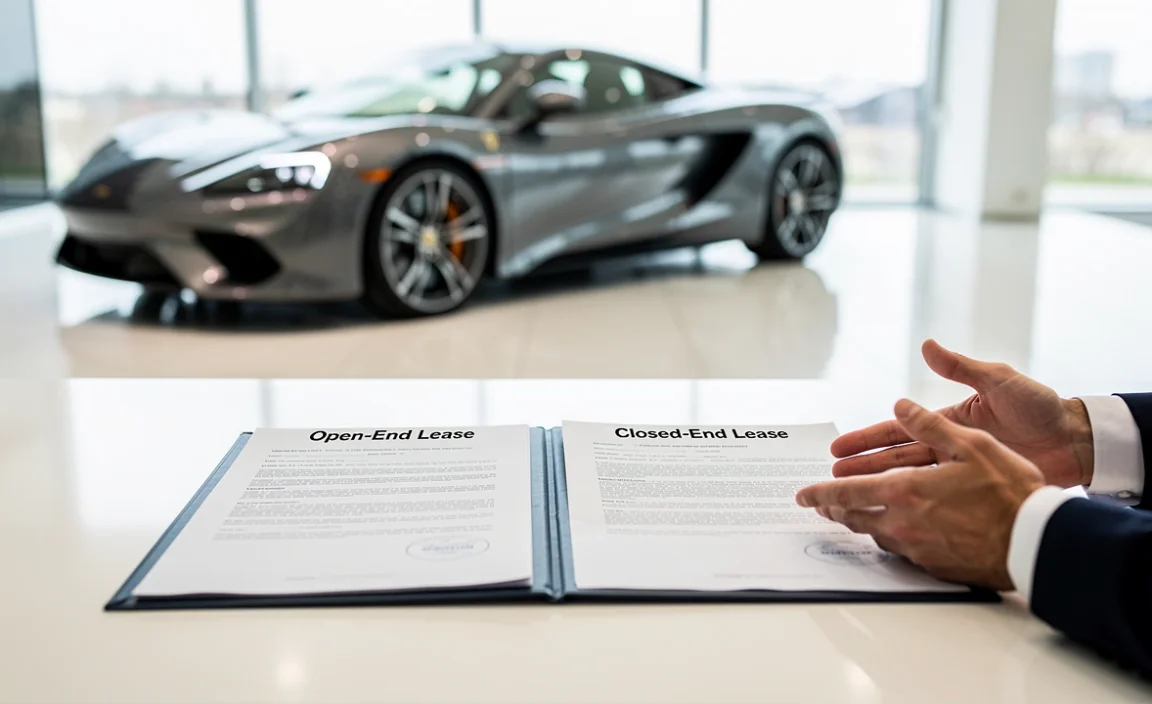
This distinction matters more in the exotic market than anywhere else.
Closed-end is the familiar structure: you agree a residual, hand the car back at term end, and walk away. The lessor carries the residual risk. If the car is worth less than projected, that is their problem.
Open-end puts the residual risk on you. At term end you owe the balloon amount. If the car is worth more than the balloon — which happens regularly with limited-production exotics — you keep the difference. If it is worth less, you pay the shortfall.
Open-end leases dominate the exotic specialist market for exactly this reason: on cars that hold value well, the lessee usually comes out ahead.
Choose closed-end on high-volume models likely to depreciate. Choose open-end on limited-production cars with strong residual histories.
When Leasing Beats Buying

Lease if you rotate cars every 18–36 months, you drive under 5,000 miles a year, the car is a high-volume model likely to depreciate, or you want the payment on a business balance sheet.
Buy if you drive more than 6,000 miles annually, you intend to keep the car beyond four years, you want modification freedom, or the model has a history of appreciating.
The mileage test is the fastest filter. At $3 to $6 per excess mile, a driver doing 12,000 miles a year on a 5,000-mile lease is looking at $21,000 to $42,000 in overage charges. That single line item usually settles the question.
Costs Buyers Forget

Acquisition fee: $1,500 – $5,000 on exotics. Disposition fee: $500 – $1,500 at return, unless you buy or re-lease. Excess wear: curb rash, stone chips, and interior marks are assessed against a wear standard that is stricter than most people expect. A pre-return inspection and pre-emptive repair is almost always cheaper than the lessor’s charge. GAP coverage: confirm whether it is included. On a rapidly depreciating exotic, the gap between insurance payout and lease balance after a total loss can be six figures. Sales tax treatment varies by state — some tax the full vehicle price, most tax the monthly payment. This can swing total cost by tens of thousands.
FAQ
How much does it cost to lease a Lamborghini?
Expect roughly $4,200 to $5,400 per month on a 36-month, 5,000-mile lease with around 15% due at signing. Advertised lower figures typically assume a much larger down payment or a very low mileage cap.
Can you lease an exotic car with no money down?

Occasionally, but the monthly payment rises substantially and most exotic lessors require meaningful capital at signing. Zero-down structures also leave you exposed if the car is totalled early.
What credit score is needed to lease a supercar?

Most lessors want 700 or higher, plus verified income or business financials. At six-figure MSRPs, expect to provide tax returns and often a personal guarantee.
Is leasing an exotic car cheaper than buying?
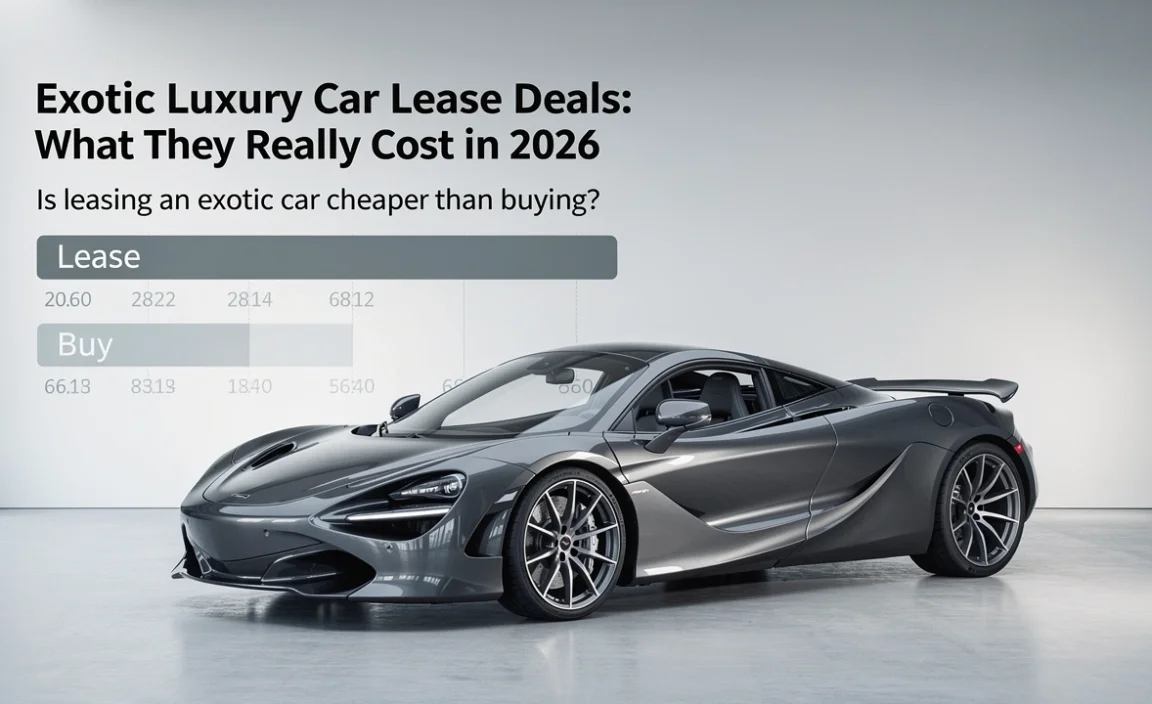
Monthly, yes. Over a full ownership cycle on a car that holds value, no. Leasing is cheaper for short-term use of depreciating models and more expensive for long-term ownership of appreciating ones.
What happens if you exceed the mileage on an exotic lease?
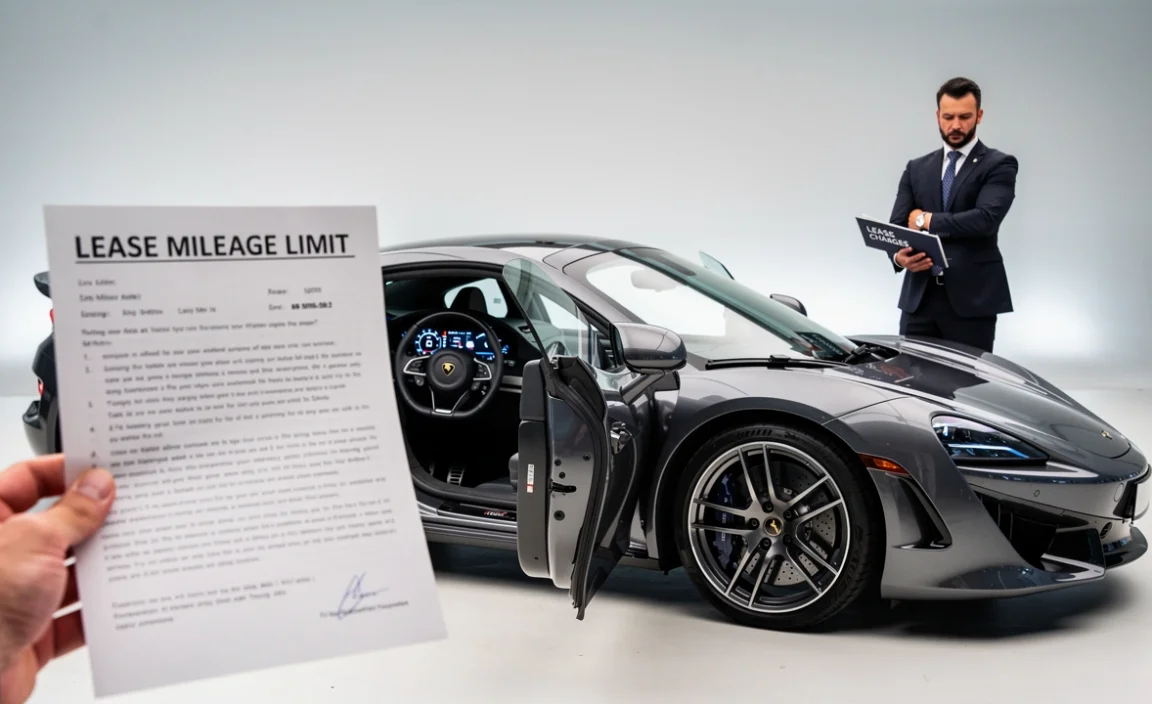
You pay an overage charge, commonly $2 to $6 per mile. On a 5,000-mile annual cap, driving 10,000 miles could add $10,000 to $30,000 per year at lease end.
The Bottom Line

Exotic leasing rewards people who are honest with themselves about mileage and holding period. If you drive rarely and rotate frequently, a lease on a high-volume model is often the cheapest way to access the car. If you drive regularly or want to keep it, buying almost always wins.
Before signing anything, request the full lease worksheet showing capitalised cost, residual, money factor, and all fees. Any provider unwilling to break those out is not one to do business with.
2 thoughts on “Exotic Luxury Car Lease Deals: What They Really Cost in 2026”