An armored Rolls-Royce weighs roughly the same as two standard ones. It carries glass thick enough to stop a rifle round, a steel-and-composite cocoon around the passenger cell, and a suspension redesigned from scratch to carry an extra two tons without handling like a truck.
Done properly, none of this is visible from the outside. That is the entire point.
This guide explains how custom armored luxury cars are actually built, what the protection levels genuinely mean, what conversions cost in 2026, and the practical realities — weight, insurance, legality — that buyers rarely consider before commissioning one.
Armor Levels Explained
Two standards dominate. Understanding them is the difference between buying real protection and buying reassurance.
VPAM (European, most common in high-end conversions):
| Level | Stops | Typical use |
|---|---|---|
| VR4 | Handgun rounds up to .44 Magnum | Entry-level executive protection |
| VR6 | 5.56mm and 7.62mm soft-core rifle | Common commercial standard |
| VR7 | 7.62x51mm NATO ball | Corporate and diplomatic |
| VR9 | 7.62x51mm armor-piercing | Heads of state, high-threat regions |
| VR10 | 14.5mm heavy machine gun | Military and specialised government |
NIJ (US standard) runs Level IIIA (handgun) through Level IV (armor-piercing rifle). NIJ IIIA roughly corresponds to VPAM VR4; NIJ IV sits near VR9.
The key point: a level rating only means something if the entire vehicle is certified to it. Many budget conversions armor the doors to VR6 but leave pillars, roof, or the firewall at a lower standard. Ask for whole-vehicle certification from an independent test house, not a component-level claim.
What Actually Goes Into the Conversion
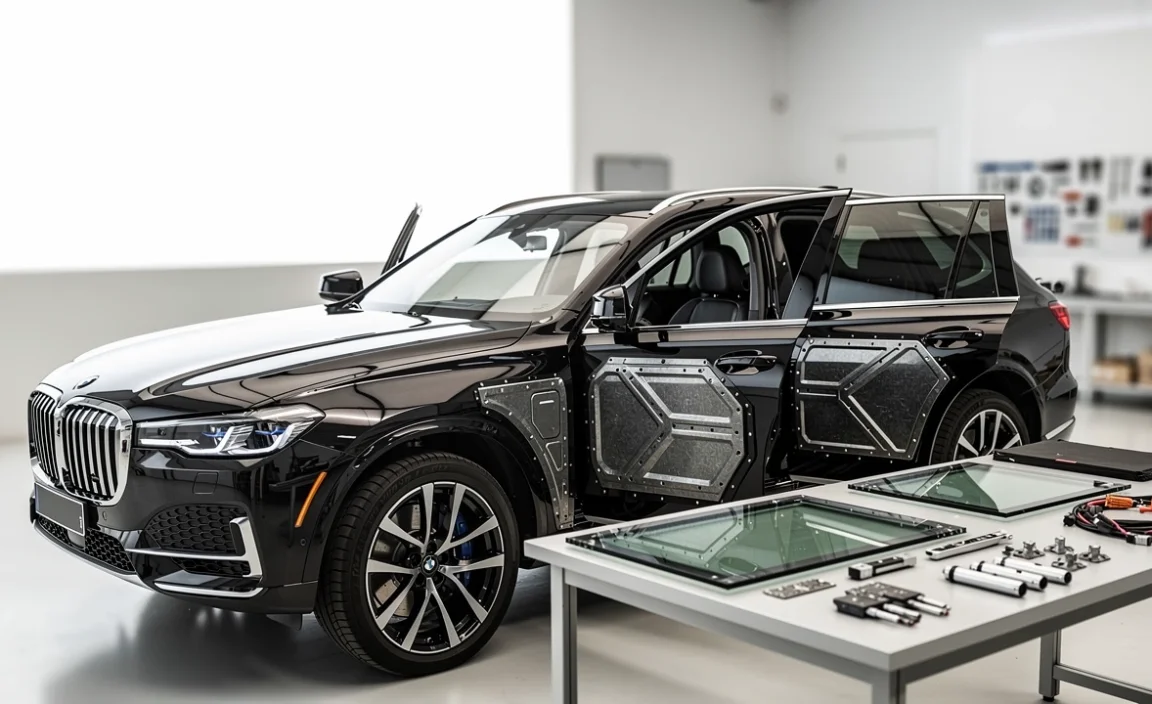
A proper build strips the car to bare shell and reconstructs it.
Ballistic glass. Multi-layer laminated glass with polycarbonate spall liner, typically 21mm to 76mm thick depending on level. This is the most visible engineering compromise — at higher levels the glass is too heavy for standard window motors and often cannot lower at all, or lowers only a few inches.
Passenger cell armor. Ballistic steel, aramid composites, or ceramic panels bonded into doors, pillars, roof, floor, and firewall. Overlapping joints matter: the gaps between panels are where cheap conversions fail.
Underbody blast protection. Layered plating against explosive devices, standard at VR7 and above.
Run-flat inserts. Composite rings inside the wheels allowing 30 to 60 miles at reduced speed after complete tyre loss.
Fuel tank protection. Self-sealing bladder or ballistic-wrapped tank.
Suspension and brake redesign. This is where good builders separate themselves. Adding 1,500–3,500 lbs requires upgraded springs, dampers, bushings, brakes, and often the driveline. A conversion that skips this will handle dangerously and destroy its own components.
Optional systems: intercom, siren and PA, smoke discharge, electric door handles, emergency oxygen, gun ports.
Factory Armored vs. Aftermarket Conversion
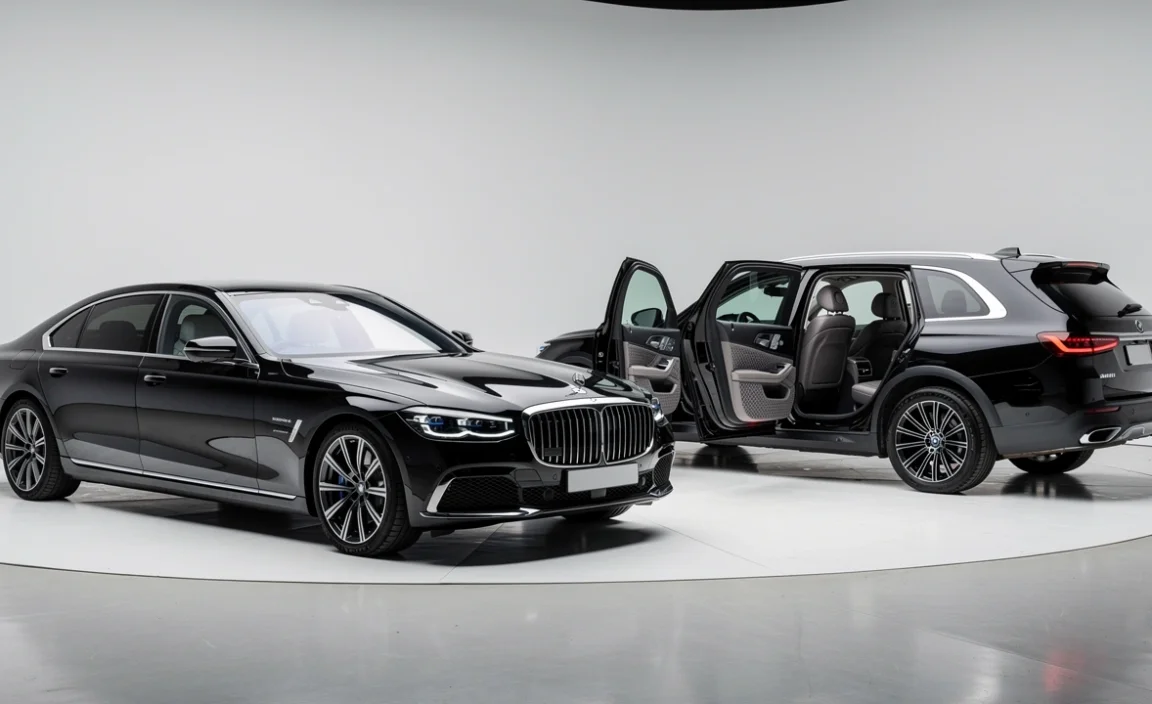
Factory-built options include the Mercedes-Benz S-Class Guard and GLS Guard, BMW 7 Series Protection, and Audi A8 L Security. These are engineered as armored vehicles from the design stage, tested by the manufacturer, and covered by factory warranty.
The advantage is integration. Factory cars have suspension, brakes, and electronics developed around the added weight rather than adapted to it. The disadvantage is limited model choice — you get the models the manufacturer offers, in the levels they offer.
Aftermarket converters can armor almost anything. Established names include INKAS (Canada), Armormax (US), Streit Group (UAE), and Alpine Armoring (US). This is the only route to an armored Rolls-Royce Cullinan, Bentley Bentayga, or a specific vehicle already in your possession.
The variance in quality is enormous. The questions that matter: is the vehicle certified as a whole by an independent lab, is the suspension and brake package engineered rather than bolted on, and can they show you completed builds of the same model.
What It Costs in 2026
| Vehicle | Protection level | Conversion cost | Total delivered |
|---|---|---|---|
| Toyota Land Cruiser / Lexus LX | VR6 | $70K – $110K | $180K – $250K |
| Mercedes-Benz S-Class | VR6 – VR7 | $120K – $200K | $280K – $400K |
| Mercedes S-Class Guard (factory) | VR9 | Included | $600K – $900K |
| Cadillac Escalade | VR6 – VR7 | $110K – $180K | $250K – $350K |
| Range Rover SV | VR7 | $180K – $280K | $450K – $600K |
| Bentley Bentayga | VR7 – VR9 | $250K – $400K | $650K – $900K |
| Rolls-Royce Cullinan | VR7 – VR9 | $300K – $500K | $800K – $1.1M |
Ranges reflect conversion quality and specification. A VR9 Cullinan build with full electronics and blast protection can exceed $1.2 million delivered. Lead times run 4 to 9 months for custom work.
The Practical Realities
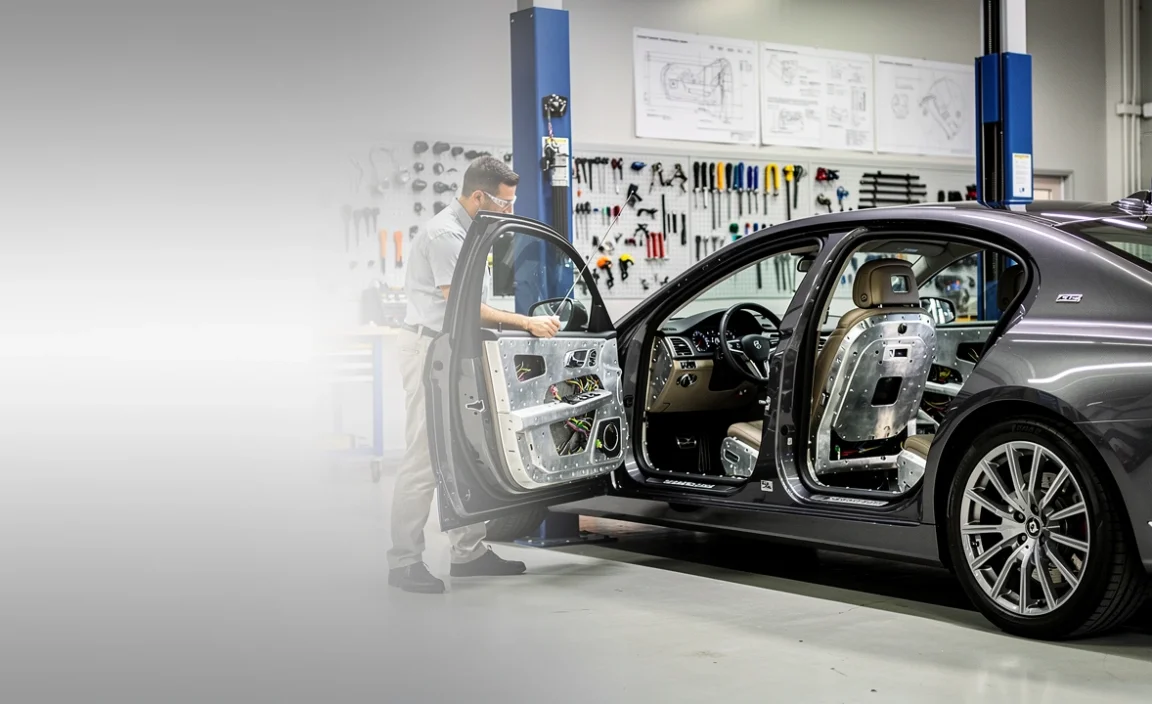
Weight. A VR7 conversion adds roughly 2,000–3,000 lbs; VR9 can add 4,000. Acceleration drops noticeably, braking distances lengthen even with upgraded systems, and fuel economy falls 25–40%.
Consumables wear faster. Tyres, brakes, and suspension components on an armored vehicle have a substantially shorter service life. Budget accordingly — this is the running cost owners most consistently underestimate.
Insurance. Standard carriers will generally not write these. Coverage comes through specialty insurers or private client divisions, and premiums typically run 30–60% above the equivalent unarmored vehicle. Documentation of the conversion and its certification is required.
Legality. Civilian ownership of armored vehicles is legal in the US and most of Europe with no special permit. Restrictions vary elsewhere, and some countries treat armored vehicles as controlled military exports — meaning international transport may require licensing. Verify before shipping.
Resale. Armored vehicles are a thin market. Expect steeper depreciation than the unarmored equivalent, since the buyer pool is small and certification does not always transfer cleanly across jurisdictions.
Service. Franchised dealers frequently decline to work on converted vehicles. Confirm your service pathway before commissioning the build.
How to Choose a Builder
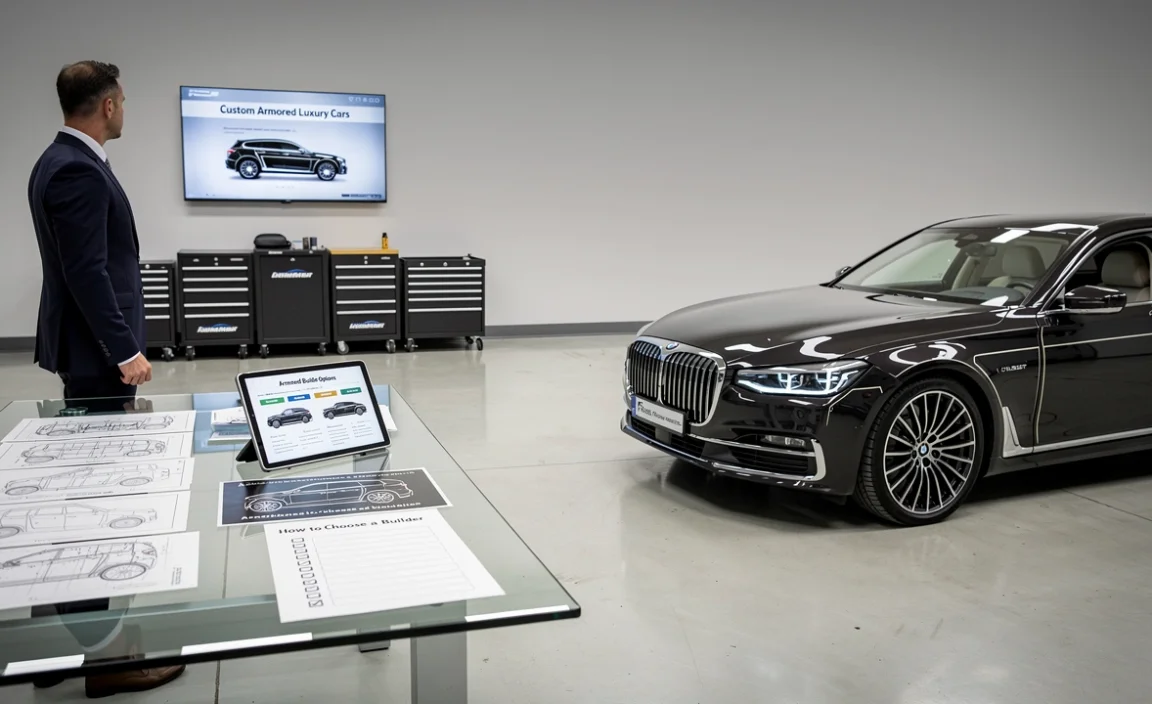
1. Demand independent certification. Whole-vehicle testing from a recognised lab. Component certificates are not the same thing.
2. Ask what changes besides the armor. If the answer does not include suspension, brakes, and driveline, walk away.
3. Visit the facility if possible. Look at a build in progress — you learn more from seeing how panels overlap than from any brochure.
4. Get references for your exact model. Armoring a Cullinan is a different engineering problem from armoring a Suburban.
5. Confirm warranty position in writing. Ask both the converter and the manufacturer what remains covered.
6. Confirm insurability before you commission. Get a written indication from a specialty insurer first. Discovering the car is difficult to insure after a $400,000 conversion is an avoidable mistake.
FAQ
How much does it cost to armor a luxury car?
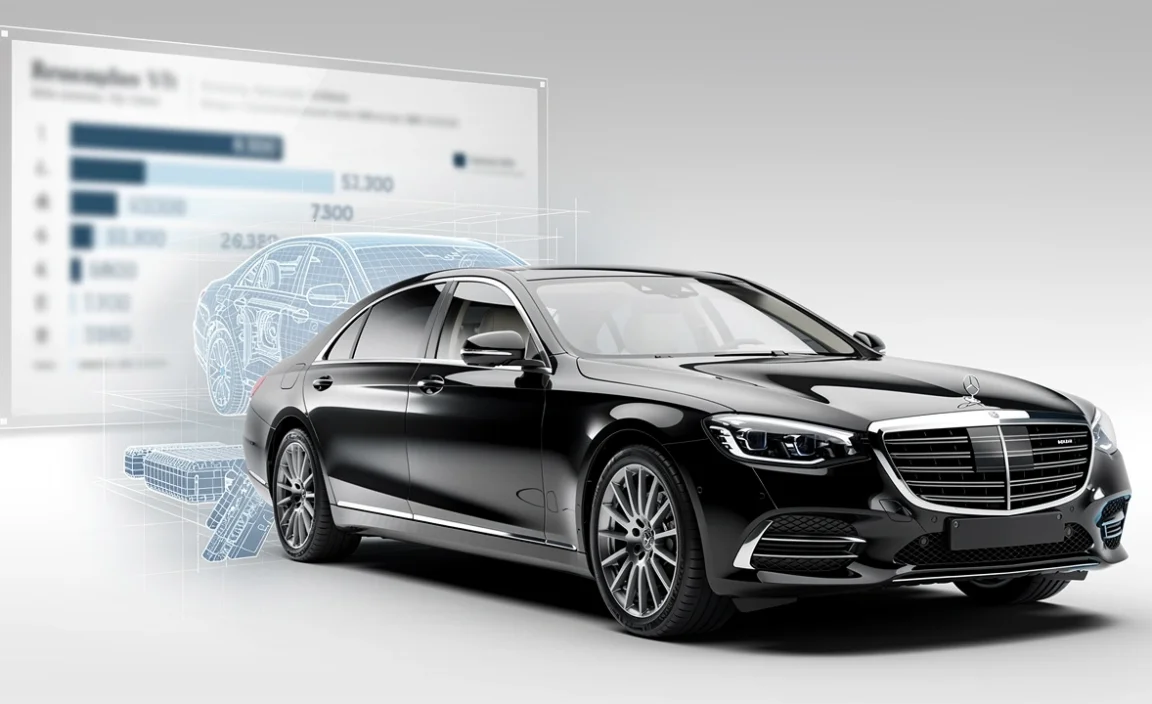
Roughly $70,000 for a VR6 conversion on a mainstream SUV, rising to $300,000–$500,000 for VR9 protection on a Rolls-Royce or Bentley. Factory armored models like the Mercedes S-Class Guard run $600,000 to $900,000 delivered.
Are armored cars legal for civilians?
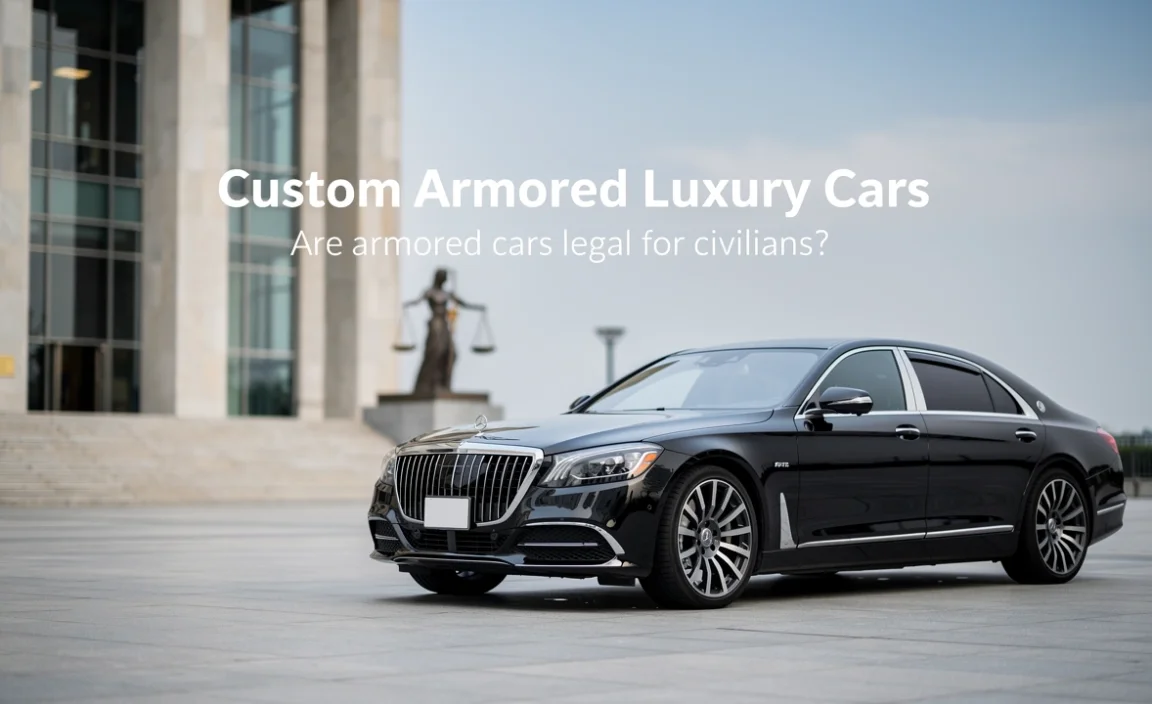
Yes in the US and most of Europe, with no special permit required for the vehicle itself. Some countries restrict ownership or classify armored vehicles as controlled exports, so verify local law before purchasing or shipping.
How much weight does armoring add?
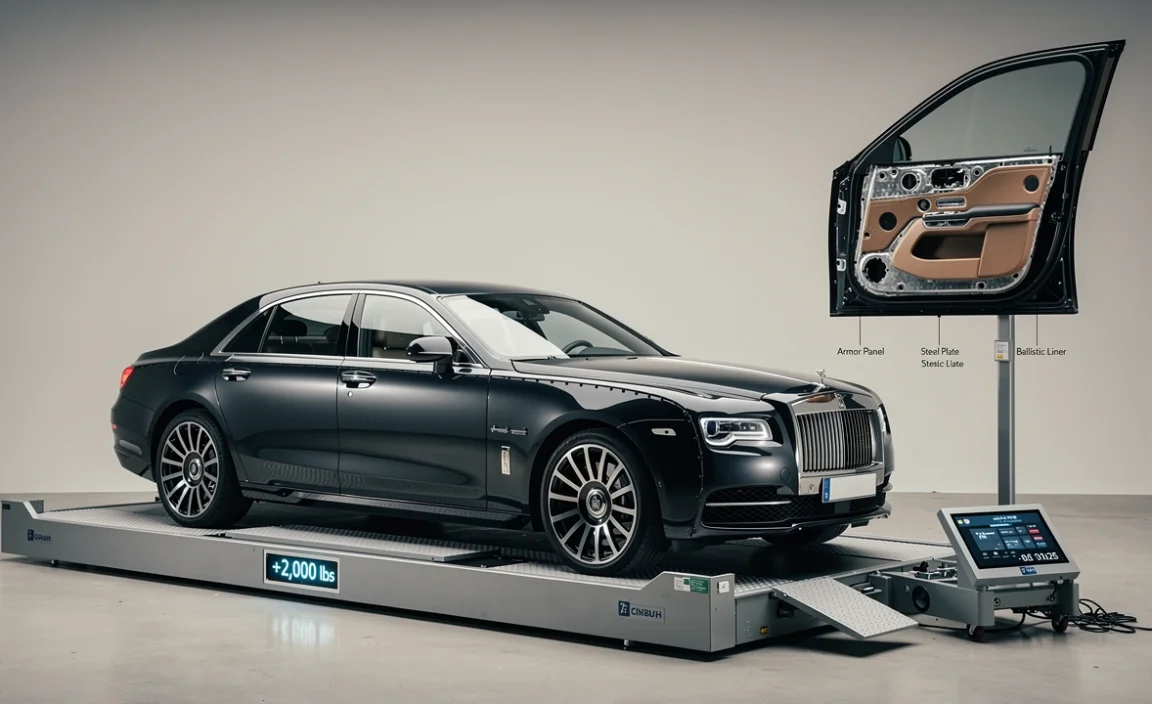
Approximately 2,000 to 3,000 lbs for VR7 protection and up to 4,000 lbs for VR9, which requires a complete redesign of suspension, brakes, and often the driveline.
Can you armor any car?
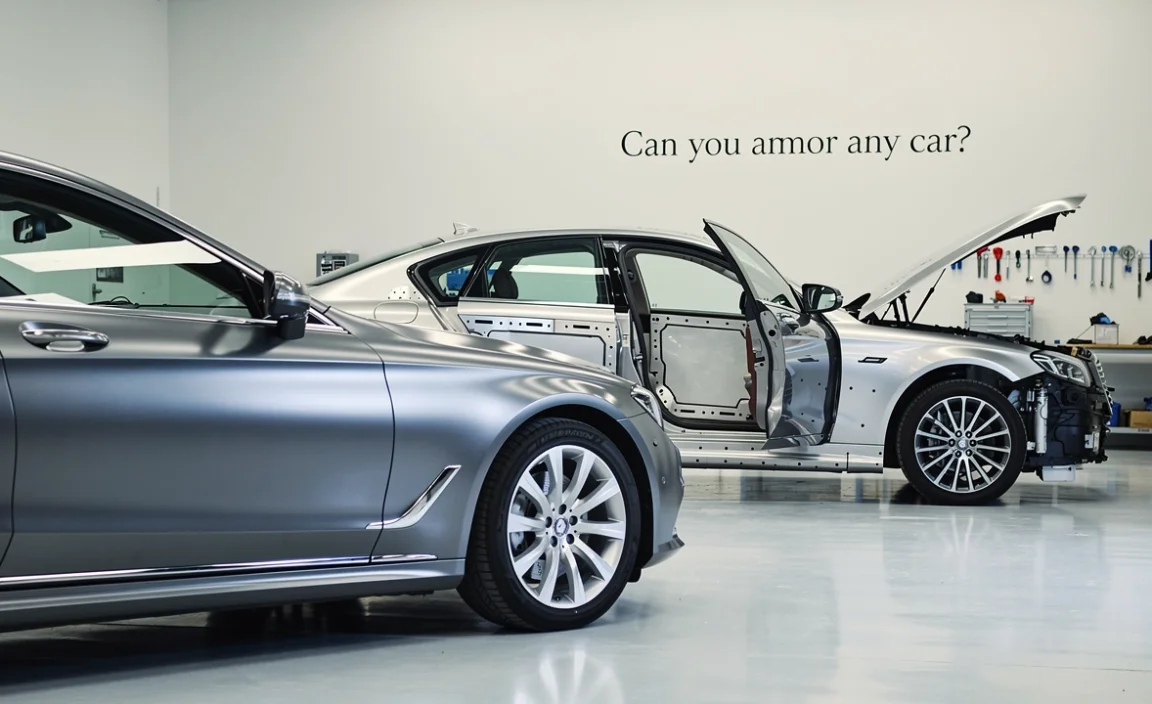
Practically, no. The vehicle needs sufficient chassis strength and payload capacity, which is why conversions concentrate on full-size SUVs and large luxury sedans. Sports cars and compact vehicles are generally unsuitable.
Do armored car windows open?
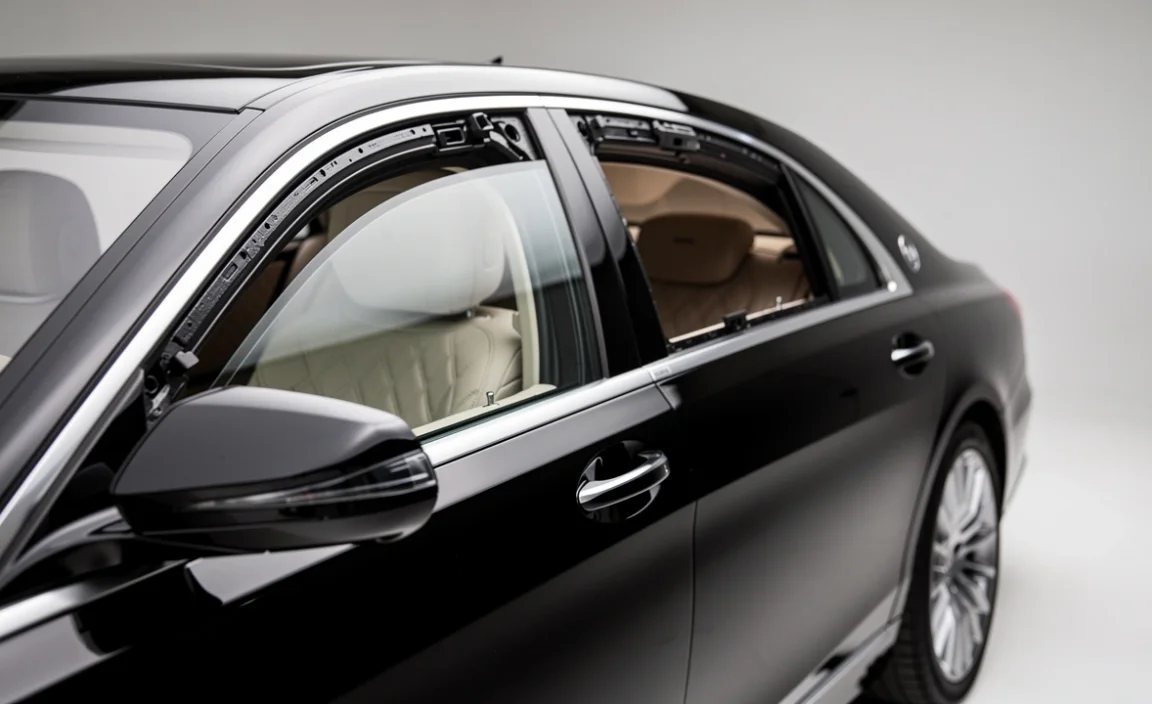
At lower levels, partially. At VR7 and above the glass is usually too heavy for standard mechanisms, so windows either do not open or lower only a few inches. Most builds include an intercom for this reason.
The Bottom Line
The armoring industry contains excellent engineering firms and a significant number of operations selling reassurance rather than protection. The distinction is visible in three places: independent whole-vehicle certification, engineered suspension and brake packages, and a documented track record on your specific model.
Get the insurance indication before the build, confirm your service pathway, and treat any quote that seems substantially below the ranges above as a warning rather than a bargain.
6 thoughts on “Custom Armored Luxury Cars: What They Cost and How They’re Built”