The dealership you buy from matters more in the exotic market than anywhere else in the car business.
At mainstream price points, a bad dealer costs you a frustrating afternoon. At $300,000, a bad dealer costs you an undisclosed accident history, a missing service record, or an allocation you will never be offered again. And because relationships determine access to limited-production cars, your first purchase often determines what you are able to buy for the next decade.
This guide covers what actually separates the best luxury car dealerships from the rest, which groups have built the strongest reputations in each US region, and how to negotiate effectively at this level.
What Separates a Great Exotic Dealer
Six things, in rough order of importance.
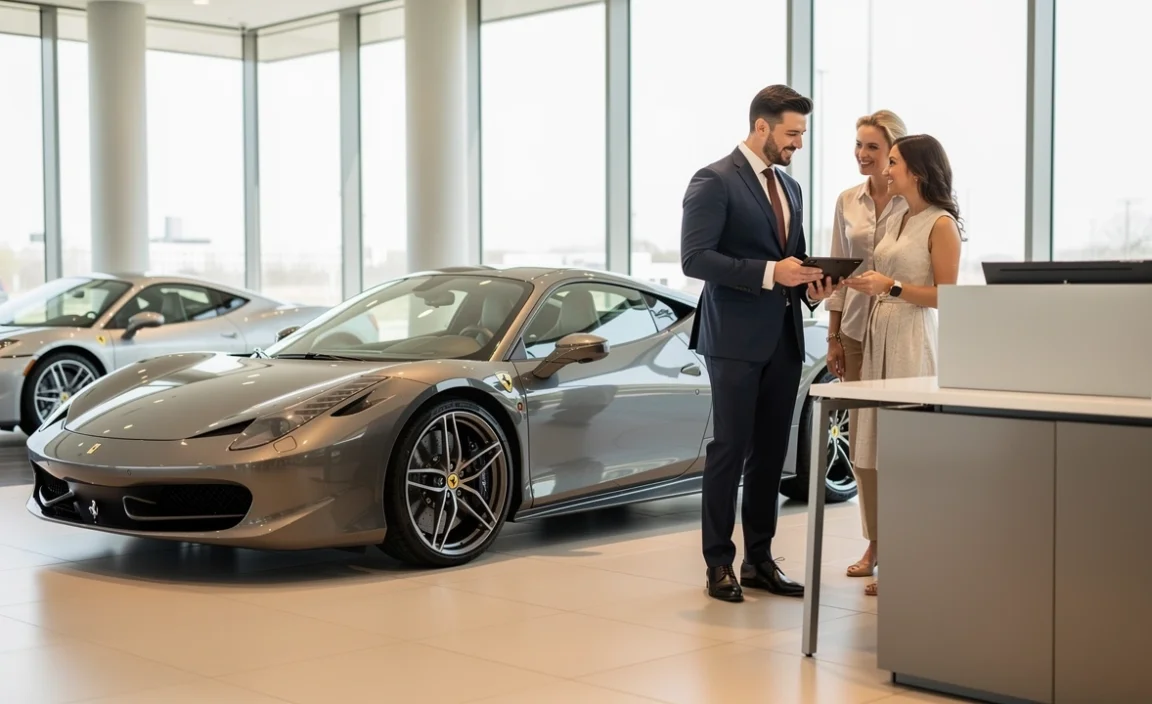
1. Allocation access. For Ferrari, Lamborghini, Porsche GT models, and limited McLarens, the dealer decides who gets a slot. Dealers with larger allocations and clear, consistent policies for earning them are meaningfully more valuable to a long-term buyer than one offering $5,000 off today.
2. Service department depth. Ask how many factory-certified technicians work on your specific model, and what the current wait time is for a major service. A dealer with two certified techs and a six-week backlog will define your ownership experience more than the sales floor ever does.
3. Transparency on history. The best dealers volunteer paint meter readings, accident disclosures, and full service records before you ask. Any hesitation on these three items is the clearest warning sign in the business.
4. Willingness to permit third-party inspection. A dealer who refuses an independent PPI is telling you something specific. Reputable stores accommodate this routinely.
5. Trade and consignment sophistication. Dealers who regularly handle six- and seven-figure trades give more realistic numbers than those who occasionally take one.
6. How they treat you before you buy. Exotic retail has a reputation for gatekeeping. The best stores do not do this — they understand that today’s browsing customer is next year’s allocation client.
Notable Dealer Groups by Region
The following groups have established strong reputations in the US exotic market. Reputations shift with management changes, so treat this as a starting point for research rather than a ranking.
| Region | Groups worth researching |
|---|---|
| Northeast | Miller Motorcars (CT), Manhattan Motorcars (NY), Herb Chambers (MA) |
| Southeast | Braman Motorcars (FL), Prestige Imports (FL), Foreign Cars Italia (NC) |
| Midwest | Bentley Gold Coast (IL), Lamborghini Chicago, Napleton Auto Group |
| Southwest | Boardwalk Auto Group (TX), Lamborghini Dallas, Scottsdale Ferrari (AZ) |
| West Coast | O’Gara Coach (CA), indiGO Auto Group (CA/TX), Rusnak (CA) |
Independent specialists are worth separate consideration. Stores that focus exclusively on used exotics — rather than holding a franchise — often carry deeper inventory across brands and have more flexibility on price. The trade-off is no allocation access and, in many cases, no in-house service capability.
Auction houses including RM Sotheby’s, Gooding & Company, Bonhams, and Broad Arrow are the main channel for collector-grade cars. Buying at auction means accepting the car as-is with limited recourse, which suits experienced buyers and punishes inexperienced ones.
How to Evaluate a Dealer Before You Visit
Check service department reviews separately from sales reviews. They frequently diverge sharply, and service is where you will spend the next several years.
Look at how long inventory sits. Cars listed for 200+ days usually indicate either aggressive pricing or an undisclosed issue.
Search the VIN. Carfax and AutoCheck are the starting point, not the conclusion. For exotics, also search the VIN in enthusiast forums and past auction listings — history that never reached a title record often surfaces there.
Ask for the paint meter readings by panel. Reputable dealers have them or will take them. Variance across panels indicates repaint.
Call the service department directly and ask about wait times and technician certification for your model. The answer tells you more than any review.
Negotiating at This Level
The dynamics are different from mainstream retail.
In-demand new cars are rarely discounted. For allocation-controlled models, the negotiation is about earning the allocation, not about price. Some dealers apply market adjustments above MSRP; whether to accept one is a judgement about how much you want that specific car.
Used exotics have meaningful room. Typical negotiating range is 5–12% off asking on cars that have been in inventory more than 60 days, more on unusual specifications.
Negotiate the total, not the components. Dealers can move on trade value, financing rate, warranty pricing, and fees. Focus on the out-the-door number.
Fees deserve scrutiny. Documentation fees vary from around $100 to over $1,000 by state. Reconditioning fees, “market adjustment,” and dealer-installed accessory charges are all negotiable.
Get every commitment in writing. Verbal promises about future allocation, service, or included maintenance have no enforceability. If it matters, it goes on the buyer’s order.
Timing helps modestly. Month-end, quarter-end, and the December period are marginally better. This matters far less in exotic retail than in volume brands.
arrange financing before you negotiate
Red Flags to Walk Away From
- Refusing an independent pre-purchase inspection
- No service records on a used exotic, presented as normal
- Pressure to decide immediately on a “car with other interest”
- Reluctance to provide the VIN before you visit
- Mandatory add-ons — paint protection, nitrogen, theft etching — presented as non-removable
- Financing offered only through the dealer with no rate disclosure
- Consignment cars where the dealer cannot answer basic history questions
Any single item is a reason to slow down. Two or more is a reason to leave.
Buying Out of State
Most exotic buyers eventually buy remotely, because the specific car they want is somewhere else.
Arrange an independent PPI at a marque specialist near the car — not at the selling dealer. Cost is $500 to $1,500 and it is the single best money you will spend.
Request a detailed video walkaround including cold start, undercarriage, and every wheel face.
Use enclosed transport. $1,200 to $4,000 domestically depending on distance. Never accept open transport on a car at this value.
Confirm the title is in hand and not pending a payoff. Title delays on out-of-state purchases are the most common source of registration problems.
Understand your state’s sales tax treatment on out-of-state purchases before agreeing on price.
FAQ
What is the best luxury car dealership in the US?
There is no single answer — it depends on brand and region. Groups such as Miller Motorcars, O’Gara Coach, indiGO Auto Group, and Braman Motorcars have strong reputations, but the right dealer is the one with allocation access for your brand and a deep service department near you.
Can you negotiate the price of a supercar?
On used exotics, yes — typically 5% to 12% off asking on cars that have been in inventory over 60 days. On allocation-controlled new models, price is usually fixed and the real negotiation is about earning the allocation.
How do you get a Ferrari allocation?

Through relationship history with a specific dealer. Most require prior Ferrari ownership purchased through them, and priority is given to buyers with multiple cars and consistent service history at that store.
Should you buy from a franchised dealer or an independent?
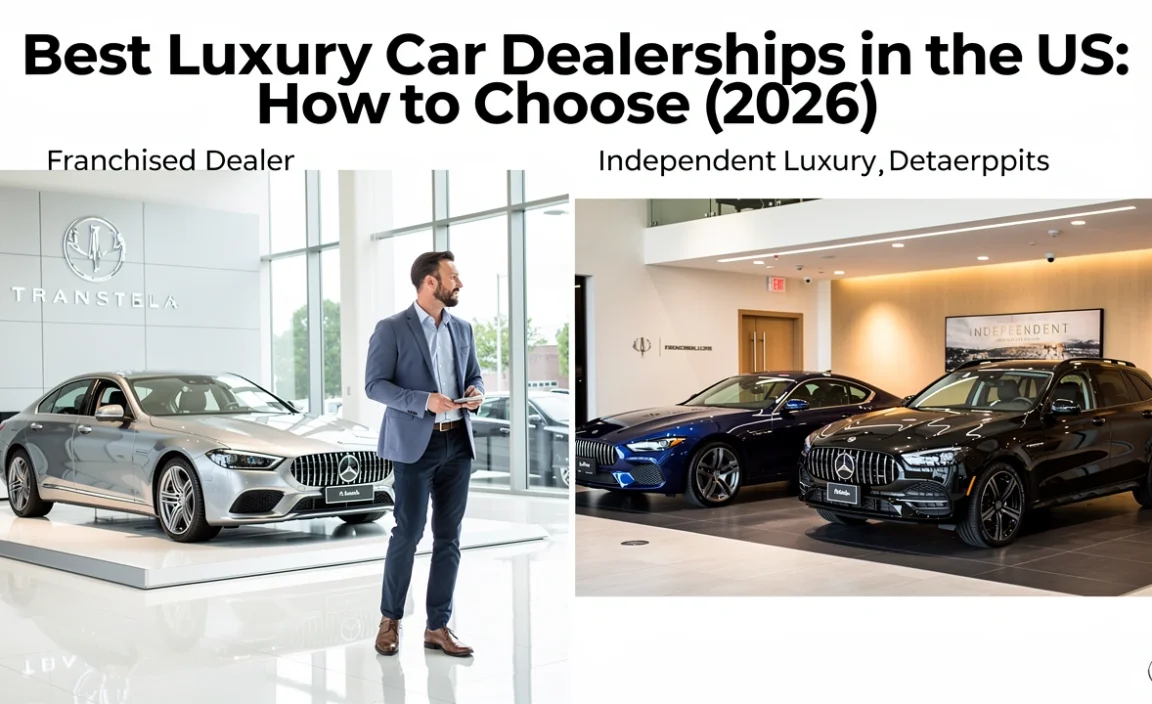
Franchised dealers offer allocation access, factory warranty work, and certified technicians. Independents often have broader multi-brand inventory and more price flexibility. For a new limited-production car, franchised is the only option; for a used exotic, either can work with a proper inspection.
Is a pre-purchase inspection necessary if buying from a dealer?
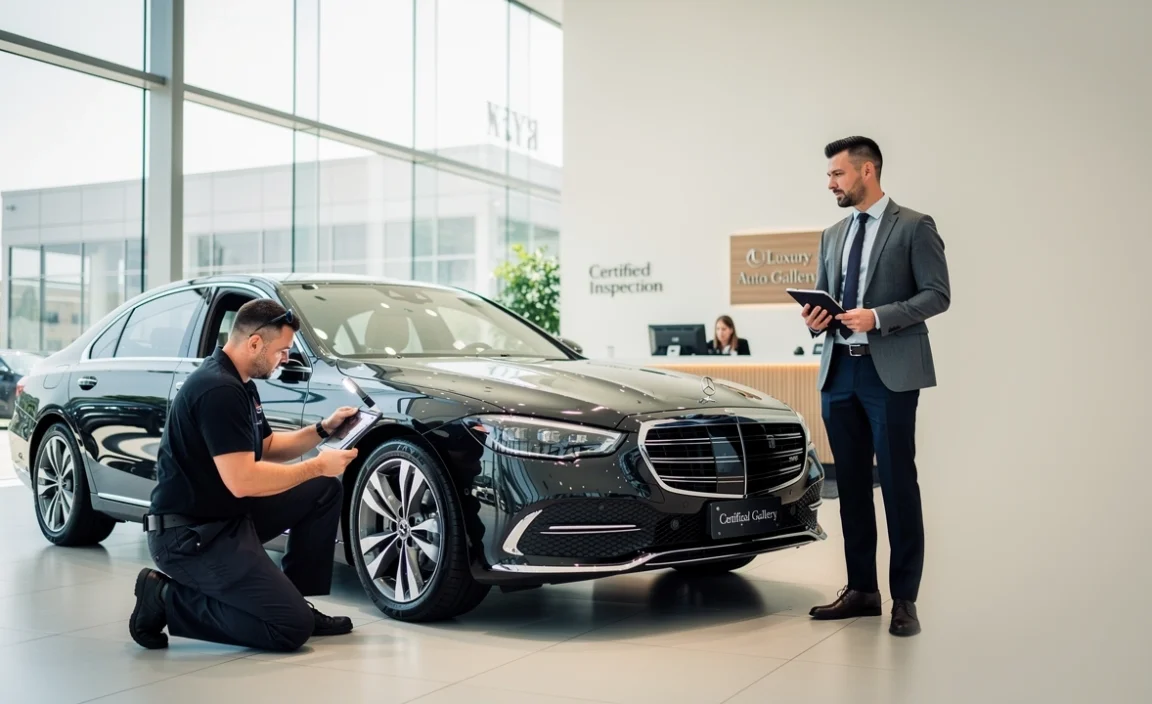
Yes, particularly on used cars. A dealer’s own inspection is not independent. Budget $500 to $1,500 for a marque specialist inspection — it is the cheapest protection available on a six-figure purchase.
The Bottom Line
In the exotic market, you are not just buying a car from a dealer — you are opening a relationship that determines your access to future cars and the quality of your ownership experience for years.
Weight your decision toward service department depth and allocation access rather than the last few thousand dollars on price. Insist on an independent inspection on any used car regardless of who is selling it. And treat transparency about history as the single most important signal a dealer gives you.
1 thought on “Best Luxury Car Dealerships in the US: How to Choose (2026)”