
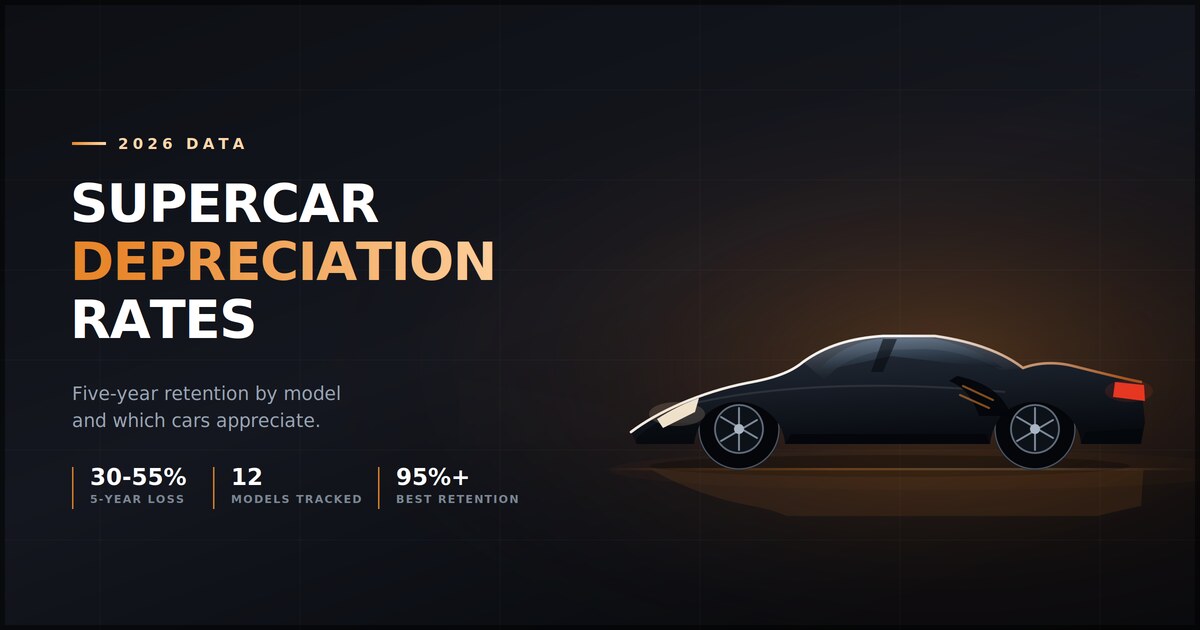
Depreciation is the largest cost of supercar ownership by a wide margin. It dwarfs insurance, service, fuel, and storage combined — and unlike those, it is almost entirely determined at the moment you choose which car to buy.
Two cars with identical purchase prices can differ by $200,000 in five-year cost purely on resale behaviour. That difference is predictable, and it follows rules.
Here is what the data actually shows about supercar depreciation rates in 2026, which models resist it, and how to position yourself on the right side of the curve.
Five-Year Depreciation by Model
Figures below are approximate five-year retention rates for well-specified, moderately driven examples in good condition with full service history.
| Model | 5-year value retention | Approx. loss | Trend |
|---|---|---|---|
| Porsche 911 GT3 (manual) | 95 – 105% | 0 – 5% | Flat to appreciating |
| Ferrari limited-run models | 100 – 140% | Gain | Appreciating |
| Lamborghini limited editions | 95 – 120% | Gain | Appreciating |
| Porsche 911 Turbo S | 70 – 78% | 22 – 30% | Very strong |
| Ferrari 296 GTB | 68 – 78% | 22 – 32% | Strong |
| Chevrolet Corvette Z06 / ZR1 | 68 – 76% | 24 – 32% | Strong |
| Lamborghini Urus | 60 – 70% | 30 – 40% | Above average |
| McLaren Artura | 48 – 58% | 42 – 52% | Below average |
| Aston Martin DB12 / Vantage | 45 – 55% | 45 – 55% | Weak |
| Bentley Continental GT | 42 – 52% | 48 – 58% | Weak |
| Maserati MC20 | 42 – 52% | 48 – 58% | Weak |
| Audi R8 (final years) | 55 – 65% | 35 – 45% | Improving as production ended |
Retention is measured against original MSRP as specified, not base MSRP. Heavily optioned cars retain a lower percentage because most options do not return at resale.
The Six Factors That Decide Depreciation
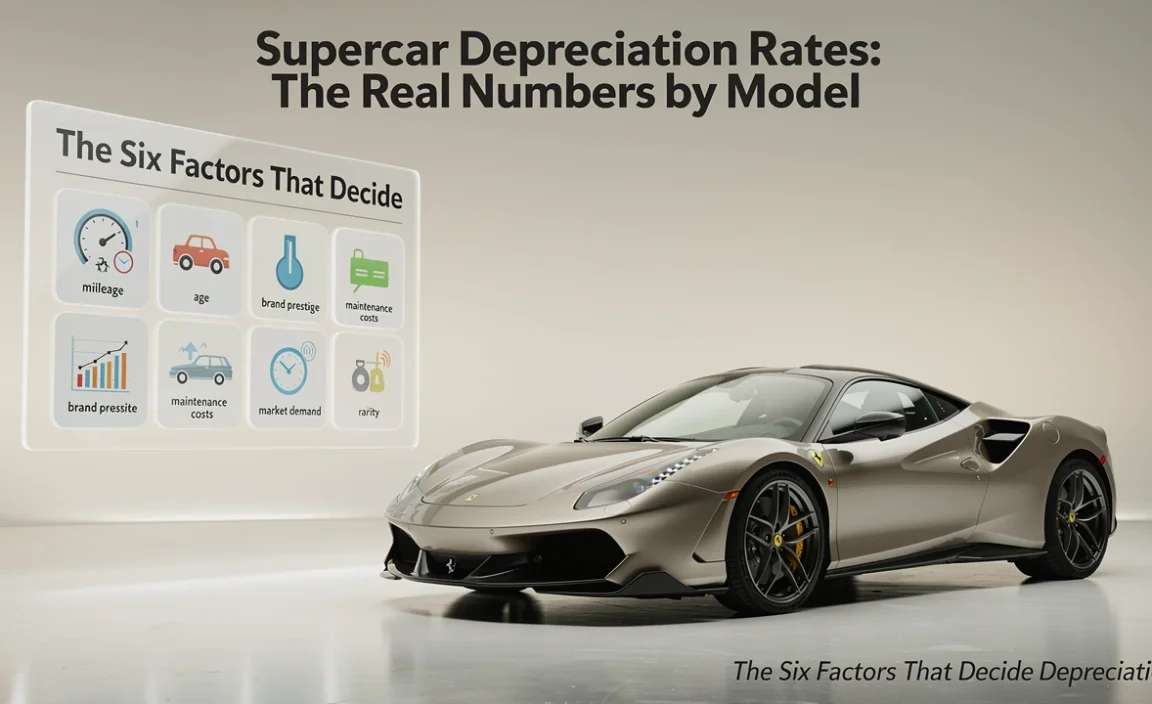
1. Production volume. The single strongest predictor. A car built in the hundreds behaves fundamentally differently from one built in the tens of thousands. This is why a limited-run variant can appreciate while its standard sibling loses half its value.
2. Transmission. Manual gearboxes now carry a substantial premium in a market where almost nothing offers one. A manual 911 GT3 can be worth $80,000 more than an identical PDK car.
3. Engine type. Naturally aspirated engines — particularly V10s and V12s — command increasing premiums as emissions rules push everything toward turbocharging and hybridisation. This trend has strengthened every year for a decade.
4. Brand resale reputation. Porsche and Ferrari benefit from decades of demonstrated value retention, which becomes self-reinforcing: buyers pay more used because they expect to recover it. Aston Martin, Maserati, and Bentley suffer the reverse cycle.
5. Model cycle timing. The steepest single drop happens when a successor is announced. Buying the outgoing model right before its replacement is revealed is the most expensive timing mistake available.
6. Specification. Rare factory colours, carbon packages, and lightweight options hold value. Personalised or unusual choices — bright interior colours, non-factory wraps, dealer add-ons — reduce the buyer pool and cost real money at resale.
The Depreciation Curve: Where the Money Goes
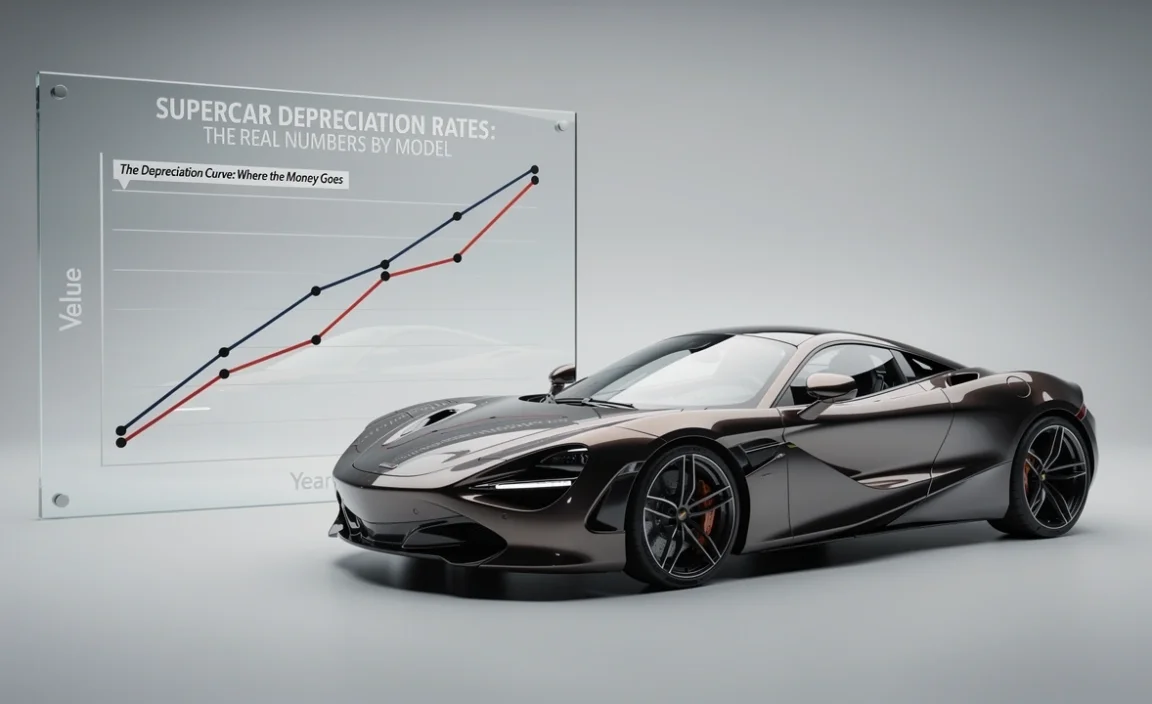
Most supercars follow a predictable pattern:
Year 1: 15–25% loss. The steepest single year. Cars that were subject to dealer markup at launch drop hardest, because the market resets to MSRP quickly.
Years 2–3: 8–12% per year. The car is still current but no longer new. This is where the largest cumulative loss occurs.
Years 4–6: 5–8% per year. Depreciation slows as the car exits the “recent used” category.
Years 7–12: the bottom. Value flattens. For most models this is the floor, and for the good ones it is where appreciation begins.
Years 12+: divergence. Limited-production and naturally aspirated cars begin climbing. High-volume models with expensive maintenance needs can continue drifting down for years.
The practical takeaway: buying at years 4–6 avoids roughly 45% of the total loss while still getting a modern car. Buying at years 10–12 on the right model can mean paying almost nothing in depreciation.
most expensive supercars in the world
Which Supercars Actually Appreciate
Appreciation is rarer than enthusiast forums suggest, but it follows consistent rules.
Reliable appreciators share three traits: production runs under roughly 1,000 units, a naturally aspirated engine or manual transmission, and a clear “last of its kind” narrative.
Examples that have followed this pattern include the Porsche 911 R and GT3 Touring in manual form, Ferrari’s limited series cars, Lamborghini’s anniversary editions, and final-year examples of discontinued naturally aspirated V10 and V12 models.
What does not appreciate, despite frequent claims: standard-production supercars in any specification, cars with heavy personalisation, high-mileage examples of anything, and models where the manufacturer later increased production.
A caution worth stating plainly: treating a supercar as an investment introduces risks most buyers underestimate — carrying costs of 5–10% annually, illiquidity, condition sensitivity, and a buyer pool that shrinks in economic downturns. Cars that appreciate are the exception, and the ones that do are usually bought by people who wanted the car regardless.
How to Minimise Depreciation
Buy used at years 3–5. The first owner absorbed the worst of it. You get a modern car at 60–70% of new cost and face a far gentler curve.
Choose factory colours and conservative specification. Resale favours combinations the next buyer would have ordered themselves.
Keep the mileage moderate but not zero. Sub-1,000-mile cars carry a small premium; cars over roughly 20,000 miles see meaningful discounts. Between 3,000 and 8,000 miles per year is the efficient zone.
Maintain complete documented service history at authorised facilities. Missing records are among the largest single value deductions at resale.
Keep every original component. Wheels, exhaust, and seats removed for aftermarket parts must be reinstalled before sale. Modified cars sell for meaningfully less.
Avoid the pre-facelift window. Selling immediately before a successor launches is the worst timing possible.
when leasing beats depreciation risk
FAQ
How much do supercars depreciate in 5 years?
Most lose 30% to 55% over five years. Porsche and Ferrari models typically retain 68–78%, while Bentley, Maserati, and Aston Martin models often retain only 42–55%. Limited-production cars can hold value or appreciate.
Which supercar holds its value best?
Manual Porsche 911 GT3 variants and limited-run Ferrari models are the strongest performers, frequently retaining 95% or more of original value over five years.
Do Lamborghinis hold their value?
Standard production models depreciate roughly 30–40% over five years, which is above average for the segment. Limited editions and anniversary models frequently appreciate.
Why do Aston Martins depreciate so fast?
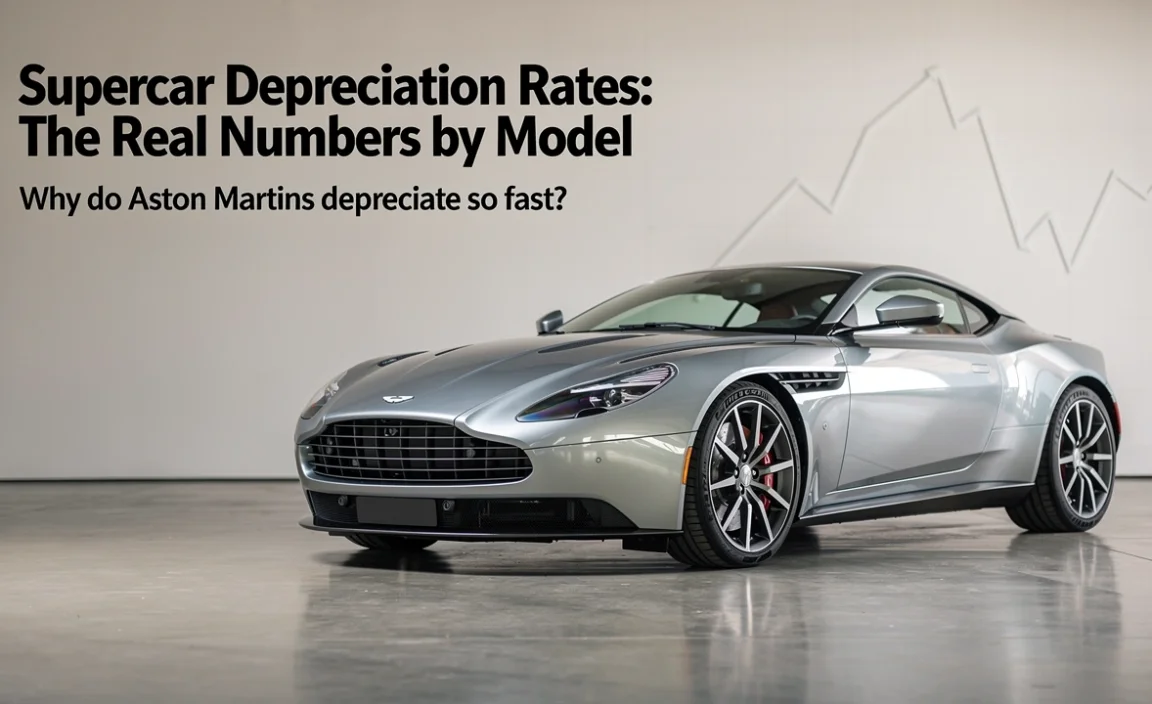
A combination of higher production volume relative to demand, historically inconsistent resale reputation, and expensive out-of-warranty maintenance that reduces the used buyer pool. This makes three-year-old examples excellent value for buyers.
When is the best time to buy a used supercar?
Years 3 to 5 for the best balance of modern specification and reduced depreciation, or years 10 to 12 on models with strong long-term prospects, where the value curve has flattened.
The Bottom Line
Supercar depreciation is not random, and it is largely decided before you take delivery. Production volume, transmission, engine type, and specification explain most of the variance between a car that loses 25% and one that loses 55%.
If minimising cost is the goal, the strongest position is a three-to-five-year-old example of a Porsche or Ferrari in factory specification with complete service history. If you are buying new and want the best chance of holding value, prioritise limited production, a naturally aspirated engine, and a conservative colour combination — and be honest that appreciation is a bonus, not a plan.
1 thought on “Supercar Depreciation Rates: The Real Numbers by Model”